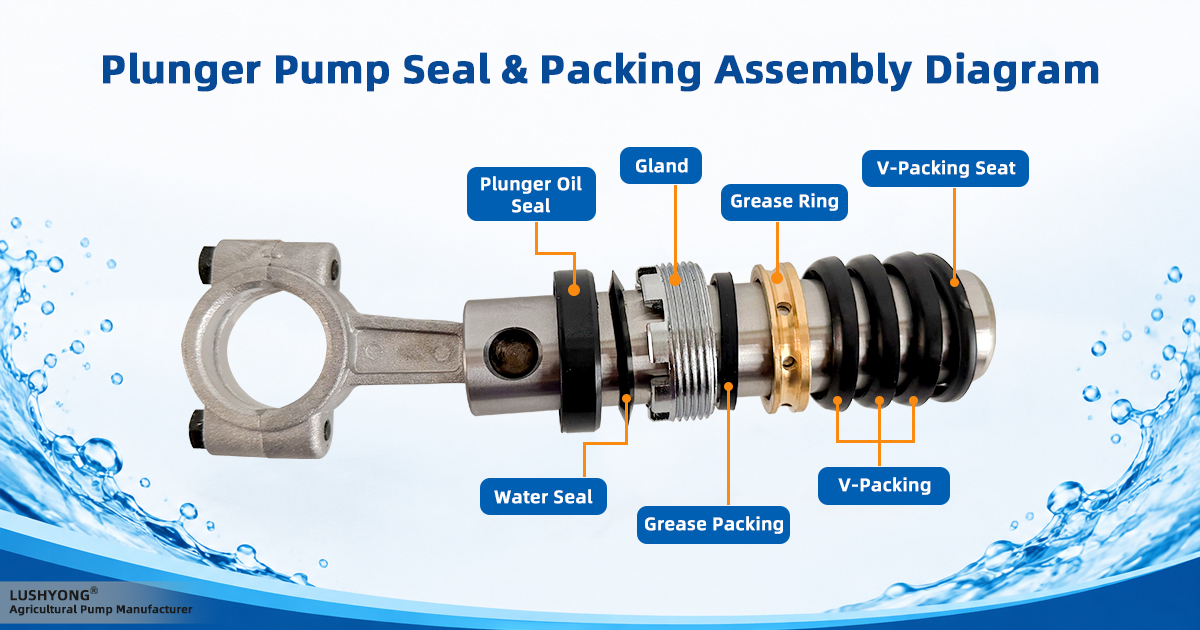
Troubleshooting guidance covers water leakage, low pressure, vibration, suction problems, plunger wear, and milky crankcase oil.
TAIZHOU, ZHEJIANG, CHINA, November 2, 2026 /EINPresswire.com/ — Zhejiang Lushyong Machinery Co., Ltd., a manufacturer of agricultural power sprayer pumps, has shared practical guidance on identifying common agricultural power sprayer pump problems and determining which parts of the spraying system should be checked first.
For distributors, dealers, and service technicians, effective power sprayer pump troubleshooting begins with the symptom rather than immediately replacing components. Water supply, filtration, hoses, pressure regulation, spray guns, operating conditions, and wear parts can all affect pump performance.
Water Leakage
Leakage around the plunger area is commonly associated with V-packing adjustment or wear. Sand, sediment, and agricultural chemicals that are not fully dissolved can accelerate wear around the packing and plunger surfaces.
For minor leakage, the packing adjustment and V-packing condition should be checked first. If leakage continues after the packing has been correctly adjusted or replaced, the plunger should also be inspected for wear. Ceramic plunger components should be checked for cracks or other damage.
Low or Insufficient Pressure
Low pressure does not necessarily indicate pump failure.
Possible causes include incorrect pressure adjustment, insufficient water supply, a blocked inlet strainer, air leakage from inlet connections, trapped air, worn valve components, excessive return flow, or worn packing.
System configuration also affects pressure. Over-sized nozzles or too many spray guns can create flow demand beyond the pump’s capacity, preventing the spraying system from reaching the expected pressure.
A logical inspection sequence begins with pressure adjustment, water supply, filtration and hose sealing before moving to internal components.
Unstable Pressure or Pump Vibration
Pressure fluctuation and pump vibration are often related to inconsistent water flow or valve operation.
Foreign material entering the valve assembly can interfere with normal valve movement. A blocked inlet strainer, insufficient water supply, air entering the inlet line, worn valves, or leaking packing can create similar symptoms.
Checking the water supply, filtration and valve assembly before replacing major components can simplify diagnosis and avoid unnecessary repairs.
Pump Cannot Draw Water
When a power sprayer pump cannot draw water, the suction side should be inspected first.
Loose inlet connections, damaged or missing seals, a blocked strainer, or trapped air can prevent normal suction. If the inlet system is properly sealed and air has been released but the pump still cannot draw water, the V-packing and valve assembly may require further inspection.
Plunger Wear and Ceramic Plunger Damage
Plunger wear can contribute to repeated leakage and difficulty maintaining pressure.
Sand, sediment, and undissolved agricultural chemicals can create abrasive wear during continuous reciprocating movement. Visible scratches or wear marks on the plunger surface may indicate this type of damage.
Ceramic components require additional attention. Dry running can generate excessive heat, while sudden contact with cooler liquid may contribute to thermal shock and cracking. In cold climates, water left inside the pump can also freeze and damage ceramic components.
Milky Crankcase Oil Requires Attention
Milky or white crankcase oil generally indicates that water has mixed with the lubricating oil.
Possible causes include worn or damaged plunger oil seals, plungers, or ceramic components. Operation should be stopped until the source of water entry is identified.
Continuing to operate with emulsified oil can reduce lubrication and increase the risk of damage to bearings, connecting rods, the crankshaft, and other internal components.
Troubleshooting the Complete Spraying System
Not every reported pump problem originates from the pump itself.
Blocked nozzles, leaking hoses, incorrect nozzle selection, insufficient engine power, operating speed, or control-system problems can all affect spraying performance.
A systematic diagnosis should therefore evaluate the complete spraying system before concluding that the pump has failed.
For distributors and service teams, this approach can reduce unnecessary component replacement, shorten troubleshooting time, and improve after-sales efficiency.
About Zhejiang Lushyong Machinery Co., Ltd.
Zhejiang Lushyong Machinery Co., Ltd. manufactures agricultural power sprayer pumps for distributors, importers, and OEM partners in international markets. With manufacturing heritage dating back to an earlier Taiwan-based operation in the mid-1980s, the company focuses on production consistency, quality control, product reliability, OEM support, spare-parts availability, and long-term distributor cooperation.”
Lushyong Team
Zhejiang Lushyong Machinery Co., Ltd
+86 138 5761 6115
sales1@twlushyong.com
Visit us on social media:
LinkedIn
Facebook
Legal Disclaimer:
EIN Presswire provides this news content “as is” without warranty of any kind. We do not accept any responsibility or liability
for the accuracy, content, images, videos, licenses, completeness, legality, or reliability of the information contained in this
article. If you have any complaints or copyright issues related to this article, kindly contact the author above.

Media gallery