Kava Root Extract Market Study By Nature, By Form, By Sales Channel (Hypermarkets/Supermarkets), and By Region – Global Market Report (2024 to 2034)
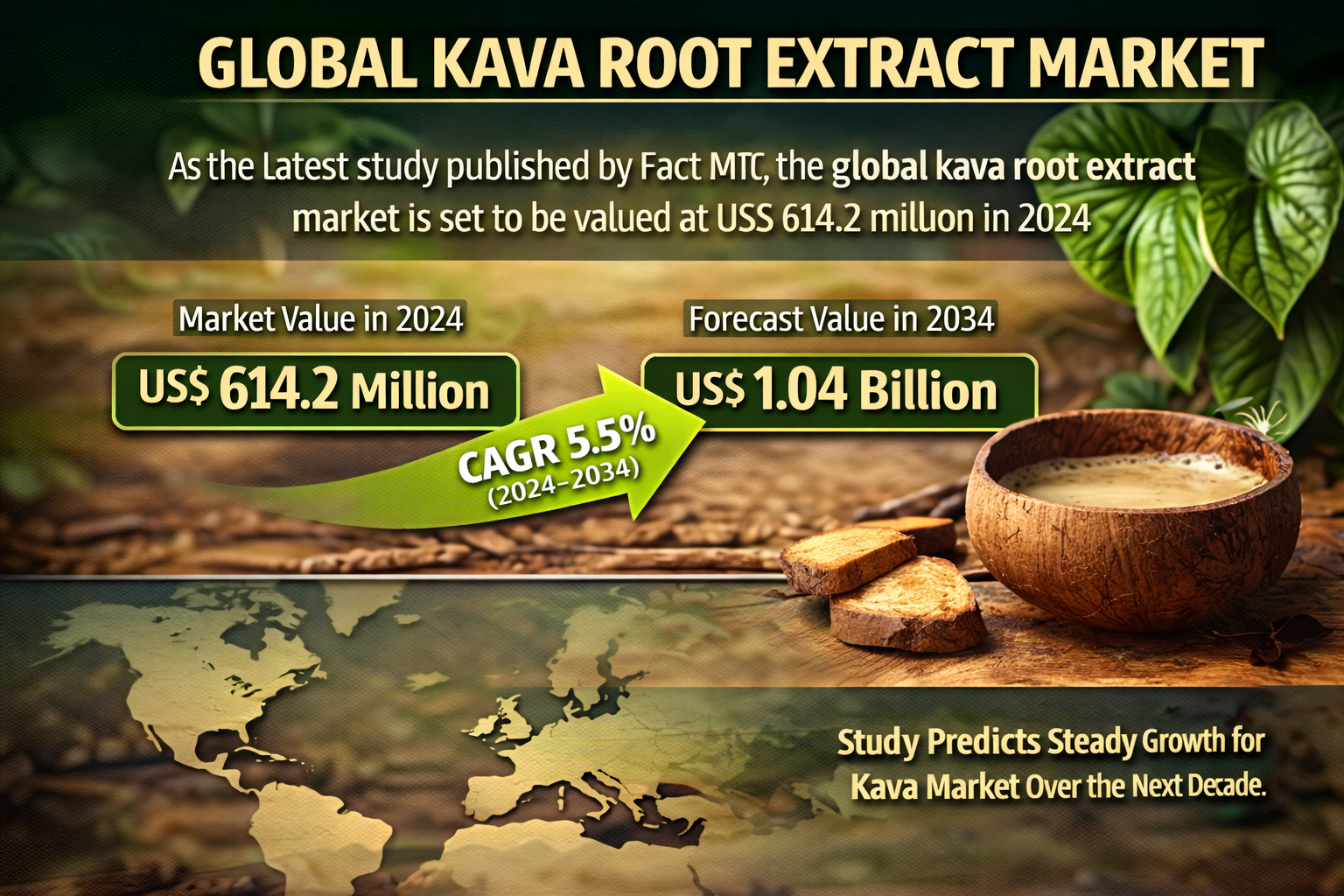
ROCKVILLE, MD, UNITED STATES, April 10, 2026 /EINPresswire.com/ — According to Fact.MR’s latest analysis, the global kava root extract market is valued at USD 614.2 million in 2024 and is projected to reach USD 1.04 billion by 2034, expanding at a CAGR of 5.5%.
𝗚𝗲𝘁 𝗗𝗲𝘁𝗮𝗶𝗹𝗲𝗱 𝗠𝗮𝗿𝗸𝗲𝘁 𝗙𝗼𝗿𝗲𝗰𝗮𝘀𝘁𝘀, 𝗖𝗼𝗺𝗽𝗲𝘁𝗶𝘁𝗶𝘃𝗲 𝗕𝗲𝗻𝗰𝗵𝗺𝗮𝗿𝗸𝗶𝗻𝗴, 𝗮𝗻𝗱 𝗣𝗿𝗶𝗰𝗶𝗻𝗴 𝗧𝗿𝗲𝗻𝗱𝘀: https://www.factmr.com/connectus/sample?flag=S&rep_id=9870
The market is expected to generate an incremental opportunity of approximately USD 425 million over the forecast period.
The industry is undergoing transformation driven by growing demand for natural stress-relief solutions, rising adoption of herbal supplements, and expansion of the global nutraceutical sector. Kava root extract is increasingly positioned as a natural anxiolytic alternative in both dietary supplements and functional beverages.
Quick Stats
• Market Size (2024): USD 614.2 Million
• Market Size (2025): USD 645–660 Million (estimated)
• Forecast Value (2034): USD 1.04 Billion
• CAGR (2024–2034): 5.5%
• Incremental Opportunity: ~USD 425 Million
• Leading Segment: Conventional Kava Extract – ~87% share
• Leading Form: Liquid Extract – fastest-growing (~5.6% CAGR)
• Leading Region: East Asia (25.7% share by 2034)
• Key Players: Now Foods, Gaia Herbs, Herb Pharm, Nature’s Answer, Mountain Rose Herbs
Executive Insight for Decision Makers
The kava root extract market is transitioning from a traditional herbal remedy to a mainstream functional wellness ingredient.
• Nutraceutical companies must focus on clinical validation and product standardization
• Beverage brands can leverage kava in non-alcoholic relaxation drinks
• Investors should prioritize companies with sustainable sourcing and regulatory compliance capabilities
Risk: Lack of regulatory clarity and inconsistent product quality may limit consumer trust and large-scale adoption.
Market Dynamics
Key Growth Drivers
• Increasing prevalence of stress, anxiety, and sleep disorders driving demand for natural remedies
• Rapid expansion of the global nutraceutical and dietary supplements industry
• Rising preference for plant-based and chemical-free health products
• Growing use of kava in functional foods and beverages
Key Restraints
• Price volatility due to climate-sensitive cultivation in Pacific regions
• Regulatory concerns in some countries regarding safety and usage guidelines
• Limited awareness in emerging markets
Emerging Trends
• Increasing demand for organic kava extract (6.5% CAGR)
• Expansion of kava-infused beverages and wellness drinks
• Growth in e-commerce sales channels for herbal supplements
• Investment in scientific research for therapeutic validation
Segment Analysis
• By Nature:
o Conventional dominates (~87.6% share) due to higher production availability
o Organic segment is fastest-growing with premium positioning
• By Form:
o Liquid extract leads growth due to ease of consumption and integration into beverages
o Powder and capsules maintain strong demand in supplements
• By Application:
o Nutraceuticals and pharmaceuticals dominate
o Functional beverages emerging as a high-growth segment
Strategic Insight:
Liquid extracts are becoming critical for product innovation and consumer convenience, especially in ready-to-drink formats.
Supply Chain Analysis (Critical Insight)
Value Chain Structure
1. Raw Material Suppliers
o Kava root farmers (Fiji, Vanuatu, Pacific Islands)
o Agricultural cooperatives
2. Processors / Extract Manufacturers
o Herbal extract companies
o Nutraceutical ingredient manufacturers
3. Distributors
o Supplement distributors
o Online retail platforms
4. End-Users
o Nutraceutical companies
o Beverage manufacturers
o Pharmaceutical firms
Who Supplies Whom
• Farmers supply raw kava roots to extract manufacturers
• Manufacturers process roots into powder, liquid extracts, and capsules
• Brands distribute products through health stores, pharmacies, and online channels
Key Insight:
Supply chain stability depends heavily on Pacific Island cultivation and climate conditions, making sourcing diversification critical.
Pricing Trends
• Commodity Tier: Conventional kava extract (mass-market supplements)
• Premium Tier: Organic, standardized, and clinically validated extracts
Pricing Influencers
• Raw material availability and climate conditions
• Processing and extraction technology
• Certification (organic, quality standards)
Margin Insight
• Premium products deliver 25–40% higher margins
• Branded nutraceutical products outperform bulk ingredient sales
Regional Analysis
Top Countries by Growth
• Japan – 7.3% CAGR
• China – 5.9% CAGR
• United States – 5.3% CAGR
• Australia – strong demand base
• Germany – herbal supplement adoption
Regional Insights
• East Asia: Largest growth hub due to urban stress and traditional medicine alignment
• North America: Strong demand for dietary supplements and wellness products
• Europe: Increasing adoption driven by natural health trends
Developed vs Emerging Markets
• Developed markets: Regulated, quality-driven growth
• Emerging markets: Awareness-driven expansion potential
Competitive Landscape
Market Structure
• Fragmented with numerous herbal and nutraceutical companies
Key Players
• Now Foods
• Gaia Herbs
• Herb Pharm
• Nature’s Answer
• Mountain Rose Herbs
• Fiji Kava Australia
• Kavafied
Competitive Strategies
• Product diversification (capsules, drinks, extracts)
• Investment in clinical research and validation
• Expansion through e-commerce and direct-to-consumer channels
• Focus on sustainable sourcing partnerships
Strategic Takeaways
For Manufacturers
• Invest in standardization and quality certification
• Expand into functional beverage applications
For Investors
• Target companies with integrated supply chains and R&D capabilities
• Focus on premium and organic product segments
For Distributors
• Strengthen presence in online and specialty health retail channels
• Educate consumers on benefits and safe usage
Why This Market Matters
Kava root extract represents a critical intersection of mental wellness, natural medicine, and functional nutrition. As consumers increasingly seek plant-based stress solutions, this market offers significant opportunities for innovation and long-term value creation.
𝗨𝗻𝗹𝗼𝗰𝗸 𝟯𝟲𝟬° 𝗜𝗻𝘀𝗶𝗴𝗵𝘁𝘀 𝗳𝗼𝗿 𝗦𝘁𝗿𝗮𝘁𝗲𝗴𝗶𝗰 𝗗𝗲𝗰𝗶𝘀𝗶𝗼𝗻 𝗠𝗮𝗸𝗶𝗻𝗴 𝗮𝗻𝗱 𝗜𝗻𝘃𝗲𝘀𝘁𝗺𝗲𝗻𝘁 𝗣𝗹𝗮𝗻𝗻𝗶𝗻𝗴 : https://www.factmr.com/checkout/9870
Related Reports:
Konjac Root Fiber Market: https://www.factmr.com/report/konjac-root-fiber-market
Raw Beetroot Sugar Market: https://www.factmr.com/report/162/raw-beetroot-sugar-market
Chicory Root Fiber Market: https://www.factmr.com/report/chicory-root-fiber-market
Starchy Roots Market: https://www.factmr.com/report/919/starchy-roots-market
About Fact.MR
We are a trusted research partner of 80% of fortune 1000 companies across the globe. We are consistently growing in the field of market research with more than 1000 reports published every year. The dedicated team of 400-plus analysts and consultants is committed to achieving the utmost level of our client’s satisfaction.
S. N. Jha
Fact.MR
+1 628-251-1583
email us here
Legal Disclaimer:
EIN Presswire provides this news content “as is” without warranty of any kind. We do not accept any responsibility or liability
for the accuracy, content, images, videos, licenses, completeness, legality, or reliability of the information contained in this
article. If you have any complaints or copyright issues related to this article, kindly contact the author above.

Media gallery