Best Practices for Non-Traditional Student Engagement
Toronto, Canada – October 13, 2025 / Modern Campus /
- Proven Strategies to Connect, Support and Retain Adult Learners in Higher Education
- Non-traditional learners require different engagement approaches than traditional students to succeed in higher education.
- Flexible, career-focused programming that accommodates work and family responsibilities drives higher retention.
- Technology-enabled communication systems create personalized touchpoints that meet students where they are.
- Recognition of prior experience and competency-based pathways accelerate credential completion.
- Data-driven support services help institutions identify at-risk students and intervene proactively.
Institutions that redesign their engagement strategies around adult learner needs will capture this fast-growing segment of higher education enrollment.
While freshman enrollment declined in recent reports, undergraduate enrollment grew 3% overall, driven primarily by non-traditional students. These adult learners, who now represent 24% of the undergraduate population, bring unique expectations, challenges and opportunities that traditional engagement strategies can’t address.
Unlike their younger counterparts, non-traditional learners view higher education institutions as partners in achieving specific career goals rather than places for exploration and personal development. They juggle work responsibilities, family obligations and financial constraints while pursuing education. This reality demands a complete reimagining of how institutions engage, support and retain these students throughout their academic journey.
Institutions that master non-traditional engagement practices will tap into a market of 36 million adults with some college credits but no degree, positioning themselves for sustainable growth.
Why Do Traditional Engagement Strategies Fail Non-Traditional Learners?
Traditional student engagement models were designed for 18- to 22-year-olds living on campus with minimal external responsibilities. These approaches assume students have time for office hours, campus events and extensive orientation programs. For non-traditional learners, these assumptions create barriers rather than bridges to success.
Adult students typically enroll part-time and live off-campus, making traditional campus-based engagement opportunities inaccessible. Research shows that 39% of students aged 23-29 and 46% of adult learners over 30 work full-time while pursuing their degrees. They’re also picking up children from school during office hours and managing household responsibilities during evening study groups.
Traditional engagement focuses on exploration and discovery, while non-traditional learners seek immediate applicability and clear pathways to career advancement. They need to understand how every course, assignment and program component directly contributes to their professional goals. Without this connection, engagement wanes and dropout rates soar.
What Are the Core Engagement Principles for Adult Learners?
Successful engagement practices for non-traditional learners rest on three core principles that acknowledge their unique characteristics and motivations.
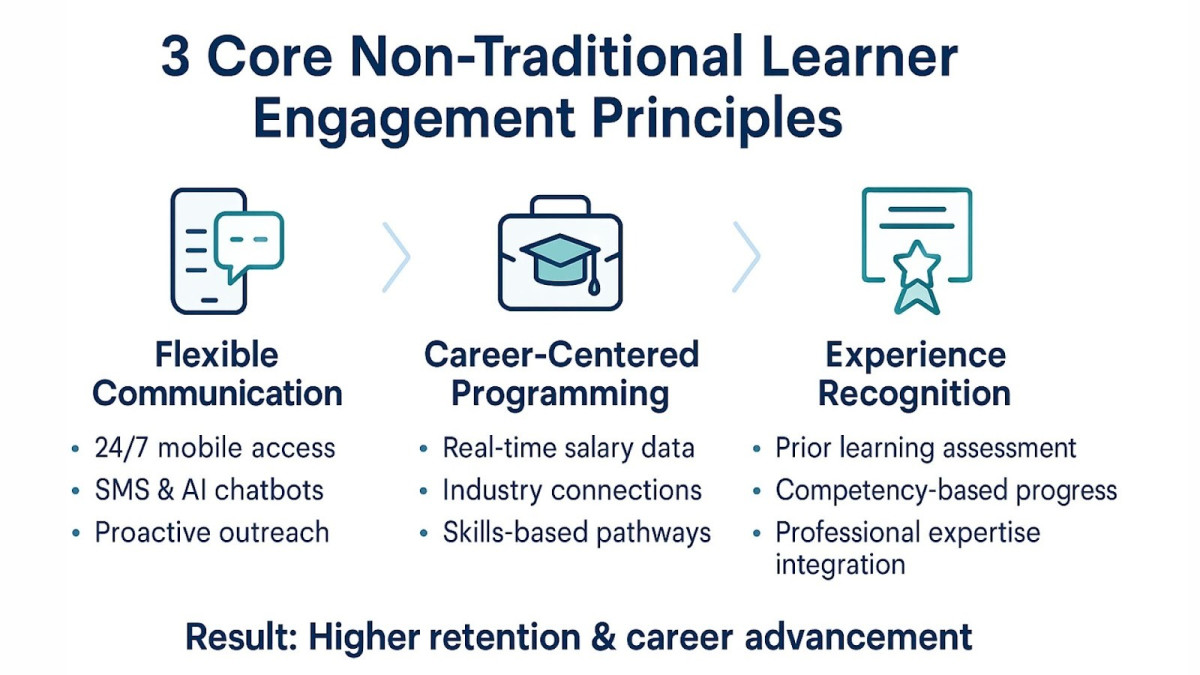
Flexible Communication Systems Transform Student Relationships
Adult learners require communication that adapts to their schedules and preferences rather than institutional convenience. Traditional email-heavy approaches often fail because between 56% and 67% of Millennials and Gen Z rarely or never use email, with their inboxes piling up with ignored messages.
Effective communication systems provide multiple touchpoints, including SMS messaging, mobile-optimized portals and AI-enhanced chatbots that offer 24/7 support. These platforms enable students to access information, complete tasks and receive guidance during evenings, weekends or breaks between work responsibilities.
The key lies in proactive, personalized outreach that anticipates student needs. Rather than waiting for students to reach out with questions, successful institutions send targeted reminders about deadlines, provide relevant resource links and offer timely encouragement during challenging periods.
Programming Must Center on Career Outcomes
Non-traditional learners invest in education for professional advancement goals. Adult learning theory emphasizes that adults need to understand the relevance and immediate applicability of their learning before they’ll fully engage with the material.
Effective engagement practices explicitly connect every program component to labor market outcomes. Consider providing real-time salary data, job placement statistics and clear pathways between coursework and industry requirements. Students should be able to articulate exactly how each class contributes to their career trajectory.
Successful institutions also integrate career services throughout the academic experience rather than treating it as a separate function. This includes embedding industry professionals as instructors, creating portfolio development opportunities and facilitating networking connections that extend beyond graduation.
Recognition of Life Experience Accelerates Engagement
Adult learners bring decades of professional and personal experience to their education. Institutions that acknowledge and leverage this experience create deeper engagement than those that treat students as blank slates.
Recognition takes many forms, from formal prior learning assessment programs that award credit for professional experience to classroom discussions that draw on students’ real-world knowledge. When instructors actively seek out and incorporate student experiences into course content, it validates their expertise while enriching the learning environment for all participants.
Competency-based education models resonate with non-traditional learners because they allow students to progress based on mastery rather than seat time. This approach recognizes that adult learners may already possess certain skills and knowledge, enabling them to accelerate through familiar content and focus energy on new areas.
Which Technology-Driven Engagement Strategies Deliver Results?
Modern engagement practices leverage technology to remove barriers and create seamless educational experiences. Here are six proven strategies that institutions use to enhance non-traditional student engagement:

1. Mobile-First Student Portals: Adult learners manage their education alongside work and family responsibilities, often using mobile devices during commutes, breaks or evening hours. Institutions that prioritize mobile-responsive designs see higher engagement rates and improved task completion.
2. Automated Milestone Tracking: Proactive communication systems that automatically notify students of upcoming deadlines, celebrate achievements and suggest next steps keep learners on track without overwhelming staff resources.
3. Virtual Advising and Support Services: Online counseling, academic advising and tutoring services accommodate diverse schedules while providing personalized support. Many institutions offer evening and weekend virtual office hours specifically for working adults.
4. AI-Enhanced Learning Pathways: Intelligent systems that recommend courses, resources and support services based on individual student data create personalized educational experiences that adapt to each learner’s goals and progress.
5. Integrated Payment and Enrollment Systems: Streamlined registration and payment processes that mirror consumer e-commerce experiences reduce friction and improve the overall student experience.
6. Real-Time Progress Dashboards: Visual progress tracking helps students see their advancement toward goals while identifying areas that need attention, maintaining motivation throughout longer degree programs.
How Can Institutions Build Meaningful Learning Communities?
Despite their busy schedules, non-traditional learners benefit from peer connections and community engagement. The challenge lies in creating these connections in ways that accommodate adult learners’ unique circumstances.
What Peer Connection Strategies Work for Busy Adults?
Successful peer engagement for non-traditional learners happens primarily through virtual platforms and project-based collaboration. Online discussion forums, virtual study groups and collaborative assignments create opportunities for connection without requiring physical presence on campus.
Many institutions establish cohort models where students progress through programs together, creating natural peer support networks. These cohorts often develop their own communication channels and mutual support systems that extend beyond formal coursework.

Professional networking opportunities also serve dual purposes, connecting students with both career advancement prospects and peer relationships. Industry-focused events, guest speaker series and alumni networking sessions provide valuable career connections while fostering community among current students.
How Do Inclusive Campus Cultures Support Adult Learners?
Creating inclusive environments for non-traditional learners requires recognition that these students have different needs and constraints than traditional-aged students. Practical considerations include providing childcare resources, offering family-friendly campus events and creating study spaces that accommodate different learning styles.
Inclusive cultures also acknowledge the diverse backgrounds and experiences that adult learners bring. Consider highlighting student success stories that reflect various career paths, ages and life circumstances, helping all students see themselves represented in the community.
Staff training also creates inclusive environments. When faculty and support staff understand the unique challenges facing non-traditional learners, they can adapt their approaches to be more supportive and effective.
How Should Institutions Measure Engagement Success?
Key performance indicators for non-traditional learner engagement include course completion rates, time-to-degree metrics and post-graduation career advancement outcomes. Platform analytics can reveal engagement patterns, showing when and how students access resources, complete assignments and interact with support services.
Student satisfaction surveys specifically designed for adult learners provide valuable qualitative data about engagement strategies. These surveys should assess factors like program relevance, schedule flexibility and support service accessibility rather than traditional campus life satisfaction measures.
Retention and persistence rates remain critical metrics, but institutions should analyze these specifically for non-traditional populations to identify unique patterns and intervention opportunities. Situational, institutional, and dispositional barriers all impact adult learner success, requiring comprehensive measurement approaches.
Frequently Asked Questions
What makes non-traditional student engagement different from traditional approaches? Non-traditional learners require flexible, career-focused engagement strategies that accommodate work and family responsibilities. Unlike traditional students who have time for campus events and office hours, adult learners need mobile-accessible resources, evening support services and clear connections between coursework and career advancement.
How can institutions with limited budgets engage non-traditional students? Technology platforms can automate many engagement functions, reducing staff workload while improving student experience. Focus on mobile-responsive communication systems, online support services and data analytics to identify at-risk students early. Many high-impact engagement strategies require process changes rather than significant financial investment.
What role does technology play in non-traditional student engagement? Technology enables institutions to meet adult learners where they are, providing 24/7 access to resources, automated milestone tracking and personalized learning pathways. Mobile-first designs, virtual advising services and AI-enhanced support systems are particularly effective for engaging busy adult students.
How do you measure engagement success for non-traditional learners? Focus on course completion rates, platform engagement analytics, time-to-degree statistics and post-graduation career outcomes. Student satisfaction surveys should assess program relevance, flexibility and support services rather than traditional campus life factors.
What Does the Future Hold for Non-Traditional Student Engagement?
Artificial intelligence will play an increasingly important role in personalizing educational experiences and providing real-time support to students.
Micro-credentialing and stackable certificates are becoming more prevalent, allowing students to achieve meaningful milestones on their way to larger degree goals. This approach maintains engagement by providing regular achievement opportunities while accommodating the interrupted educational patterns common among adult learners.
Partnership development between institutions and employers continues expanding, creating direct pathways from educational programs to career advancement opportunities. These partnerships enhance engagement by making the connection between education and professional outcomes more explicit and immediate.
As higher education institutions compete for non-traditional learners, those that invest in comprehensive engagement strategies will differentiate themselves. The institutions that succeed will truly understand adult learners’ needs and design every aspect of the educational experience around supporting their success.
Modern Campus provides comprehensive solutions designed specifically for non-traditional student engagement, from personalized communication platforms to career pathway tools that connect education to real-world outcomes.

Contact Information:
Modern Campus
2482 Yonge Street #1366 Toronto, Ontario M4P 2H5
Toronto, ON M4P 2H5
Canada
Modern Campus
https://moderncampus.com/


