What OEM-Approved Auto Body Repair Really Means for Your Car’s Safety
Little Rock, United States – October 20, 2025 / Bale Collision Center (Downtown) /
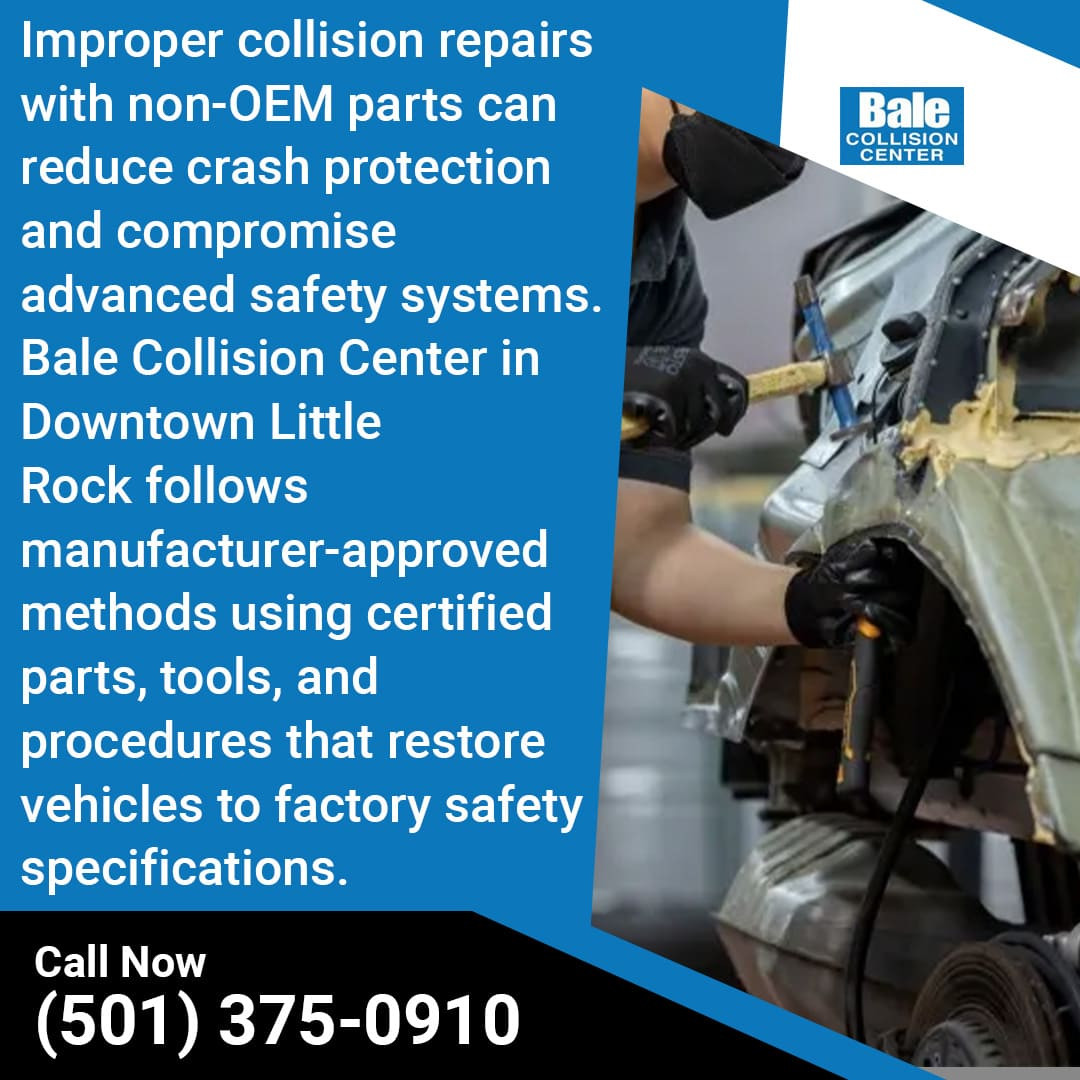
Little Rock, AR – Improper or incomplete car body repairs can affect structural integrity, safety systems, and long-term performance. Misaligned frames, uncalibrated sensors, or non-approved parts may reduce crash protection and compromise advanced safety systems. High-quality repairs are essential for protecting passengers and preserving vehicle performance.
Bale Collision Center (Downtown) offers expert auto body repair in Downtown, Little Rock, AR, that follows Original Equipment Manufacturer (OEM) standards. Using manufacturer-approved methods, parts, and diagnostic tools, the team restores vehicles to their intended safety specifications. This approach reduces the risks tied to substandard repairs, preserves long-term value, and provides car owners with confidence that their vehicle is safe for the road.

Understanding OEM-Approved Repairs
OEM stands for Original Equipment Manufacturer, the company that designs and builds the vehicle. These manufacturers issue specific repair guidelines to maintain structural integrity, safety system functionality, and overall vehicle performance. Following OEM standards means technicians rely on these precise instructions rather than shortcuts.
Automakers publish repair guidelines detailing frame alignment, welding techniques, and the use of approved parts for critical systems. Repairs that do not follow OEM specifications may compromise safety, reduce crash protection, and affect long-term reliability.
The Importance of Parts, Tools, and Procedures
OEM Parts vs. Aftermarket Parts
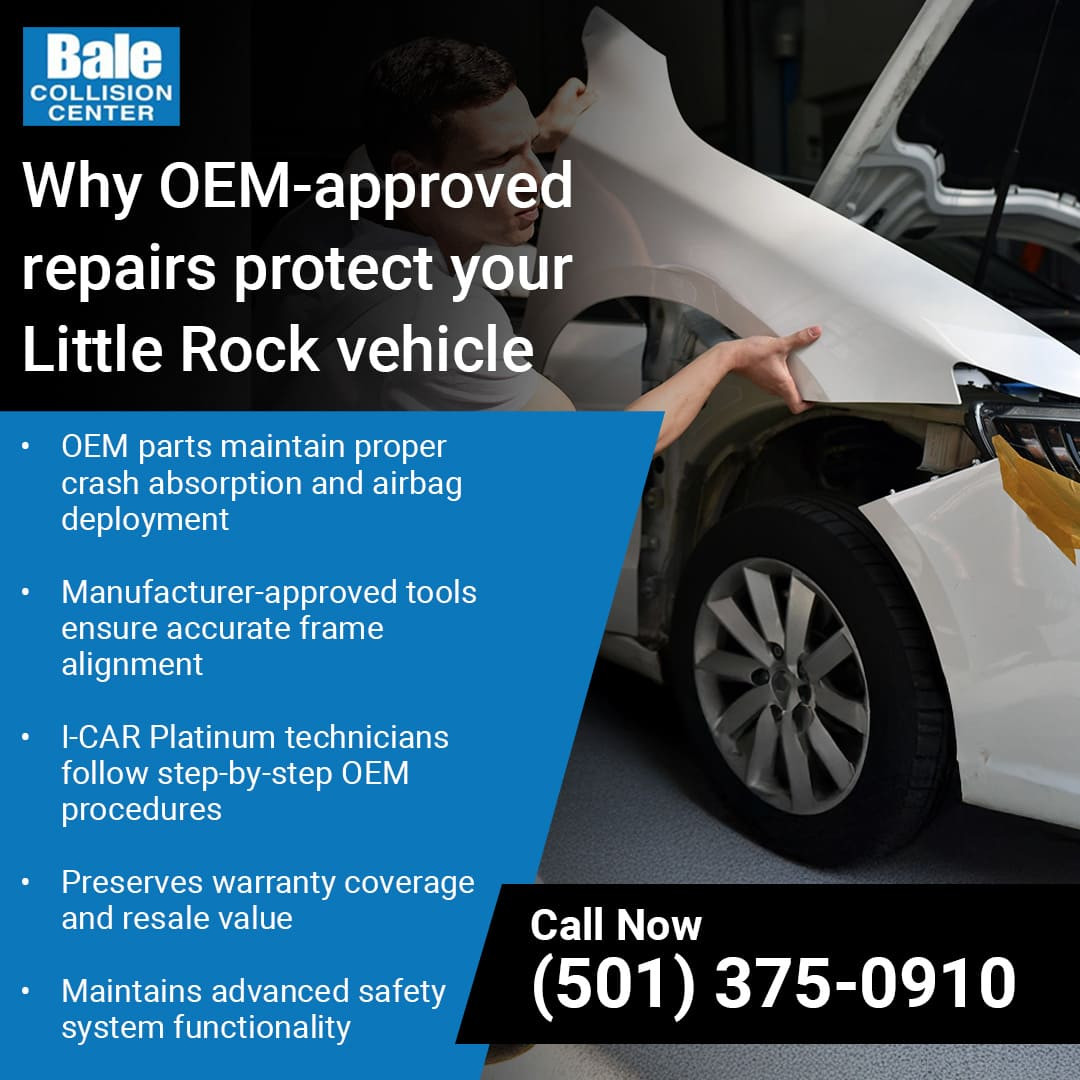
OEM parts are produced or approved by the vehicle manufacturer and are engineered to meet exact specifications. They maintain proper crash absorption, support correct airbag deployment, and allow advanced safety systems like lane departure warnings and adaptive braking to function properly. Aftermarket parts may fit the vehicle but are not always tested to the same standards, which can lead to reduced safety and higher future repair costs.
Manufacturer-Recommended Tools
Proper tools are critical for accurate and safe repairs. Manufacturer-approved alignment systems, diagnostic equipment, and calibration devices allow technicians to restore vehicles according to factory specifications. Precision tools are particularly important for vehicles equipped with advanced safety systems, ensuring all components function as intended.
Step-by-Step OEM Repair Procedures
OEM guidelines provide detailed instructions for every model and repair type. These procedures include structural repairs, sensor calibration, component installation, and final inspections. Following these step-by-step processes restores a vehicle’s safety, performance, and handling characteristics. Proper adherence reduces the risk of future failures or uneven wear.
Why Certified Repairs and OEM Standards Are Essential
Technician Training and Credentials
Certified auto body repair technicians have completed industry-recognized programs, such as I-CAR Gold Class or ASE certifications. This training gives them a thorough understanding of frame alignment, sensor recalibration, and paint application. Technicians with these certifications are equipped to handle complex repairs on modern vehicles safely and effectively.
OEM Approval and Repair Quality
OEM-approved car body repairs require technicians to follow manufacturer standards at every step. While certification demonstrates skill, OEM procedures guarantee that parts, tools, and repair methods meet factory specifications. Combining certified technicians with OEM-approved repairs delivers full safety, restores advanced safety systems, and maintains vehicle reliability.
Long-Term Benefits of OEM-Approved Auto Body Services
Protecting Resale Value
OEM-compliant repairs help maintain vehicle resale value. Using approved parts and procedures reassures buyers that the vehicle meets safety and performance standards. Documentation of OEM-compliant repairs signals proper maintenance, preventing price reductions and simplifying future sales or trade-ins.
Warranty Considerations
Incorrect repairs can void manufacturer warranties. Using non-OEM parts or failing to follow OEM procedures may result in coverage denial for future issues. OEM-approved auto body services preserve warranty protections and reduce the risk of costly out-of-pocket repairs.
Finding a Trusted Auto Body Shop in Downtown Little Rock
Expertise is a critical factor when selecting an auto body shop. Technicians with advanced training prevent misaligned frames, improperly calibrated ADAS sensors, and uneven paint finishes. Experience and a proven track record indicate a shop’s ability to handle complex repairs safely and efficiently. Bale Collision Center, serving the Little Rock community since 1952, combines decades of experience with I-CAR Platinum-certified technicians.

Bale Collision Center: Certified and OEM-Approved Auto Body Services
Bale Collision Center delivers certified, OEM-approved auto body services that restore vehicles safely and maintain long-term value. Repairs follow manufacturer standards to preserve structural integrity, allow airbags and advanced safety systems to operate correctly, and maintain warranty protections. Drivers can trust that their vehicle is fully restored and ready for the road.
For certified auto body repair in Downtown Little Rock, contact Bale Collision Center at (501) 375-0910 or email bccdowntown@baleautomotive.com to schedule an appointment and restore your vehicle with confidence.
Contact Information:
Bale Collision Center (Downtown)
100 N Cross Street
Little Rock, AR 72201
United States
Jason Spiller
(501) 375-0910
https://balecollision.com/
Original Source: https://balecollision.com/auto-body-shop/what-oem-approved-auto-body-repair-really-means-for-your-cars-safety/


