Key Takeaways
- Monthly donors provide the predictable funding required to prevent critical medical supply shortages, ensuring children have uninterrupted access to severe pain medicine, specialized bandages, and antibiotics.
- Recurring donations allow charities to maintain a high transparency rating by ensuring every dollar is allocated to immediate, documented patient needs.
- Individual care for severe Epidermolysis Bullosa (EB) can cost up to $160,000 per year, creating an impossible burden for families living in poverty without government healthcare.
- Monthly donations can help finance the exact gaps that larger, research-focused organizations often miss, such as funding emergency hospitalizations and blood transfusions.
Emergency treatments — like care for severe ear canal blisters that risk deep infection — depend on funds being available immediately, which is where recurring donations make the biggest difference.
Individual EB Care Costs Create a Life-Threatening Supply Crisis
Epidermolysis Bullosa (EB) is a rare, genetic, and currently incurable skin disease that causes the skin to be as fragile as a butterfly’s wing. Children with the condition can have up to 80% of their skin missing at any given time, making everyday activities a source of severe wounding. In many parts of the world, specialized wound care supplies cost between $500 and $2,000 monthly—an insurmountable barrier for families who are already overlooked by major charities.
This supply access crisis leaves children at constant risk of sepsis and uncontrolled pain. EB supports charities’ work to close this gap by shipping medical supplies directly to families who otherwise lack access to specialized wound care.
Monthly Donors Dramatically Reduce the Risk of Supply Shortages
Predictable monthly funding creates a safety net that prevents medical emergencies from becoming fatal tragedies. Unlike sporadic gifts, recurring support establishes a reliable supply chain, ensuring children never run out of critical materials during their most vulnerable moments.
- Consistent Access to Pain Relief: EB causes relentless, severe pain. Monthly donors ensure that severe pain medicine never stops, preventing children from enduring unbearable suffering during daily bandage changes.
- Specialized Bandages Instead of Inadequate Substitutes: Without support, families are often forced to use inadequate materials that can actually tear the skin further. Monthly donations provide specialized non-stick bandages that promote healing.
- Emergency Antibiotics to Combat Sepsis: Open wounds are constant pathways for infection. Monthly funding guarantees immediate access to antibiotics and IV treatments when infections emerge, preventing minor wounds from progressing to fatal sepsis.
Why Recurring Support Outperforms One-Time Gifts for Rare Diseases
Expert opinions in the field of rare disease advocacy suggest that predictable funding models are the most effective way to manage chronic, life-long conditions like EB.
Preventing Emergency Shortages
Monthly giving programs provide a steady income stream vital for responding to urgent needs without financial uncertainty. When medical crises arise—such as a child requiring emergency blood transfusions or treatment for a severe infection—monthly donors ensure the funds are already available for immediate intervention.
Sustainable Care and Accountability
Recurring support allows organizations to focus on direct patient services rather than administrative fundraising. For charities maintaining a Platinum GuideStar rating, this consistency is key to documenting the transparent use of funds and the long-term impact on the children helped.
Real Patient Impact: How Monthly Support Changes Survival Outcomes
The difference between sporadic and consistent funding is best seen in actual patient outcomes. Reliable donors create a safety net that allows for high-quality medical care and emergency life-saving interventions.
Critical Blood Transfusions
Children with severe EB often suffer from chronic blood loss and anemia due to extensive wounding. Monthly funding ensures they can receive emergency blood transfusions the moment their levels drop dangerously low, preventing heart failure and other systemic complications.
The Transition to Proper Wound Care
Specialized wound care transforms the lives of these children. Monthly donations fund the bandages that absorb fluids while protecting the remaining skin. This professional-grade care, provided by expert-led programs, significantly reduces the frequency of emergency hospitalizations.
Stopping Fatal Infections
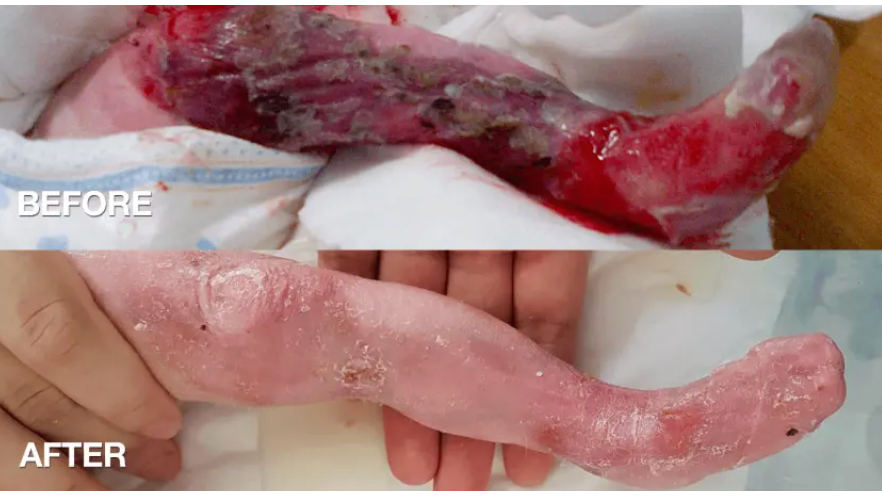
Infections are a primary cause of mortality for children with EB. Monthly funding guarantees access to emergency hospital care and antibiotics. Success stories, such as children recovering from severe MRSA infections, demonstrate that these treatments are the direct result of a committed donor community.
Updates as Proof: A Bridge Built On Trust
Updates serve as a critical bridge between a donor’s contribution and the actual survival of a child. In the field of rare disease advocacy, where medical complexities can often obscure results, these direct mission updates provide a “proof of life” that documents exactly how specialized bandages, pain medicine, and emergency interventions are deployed in real-time.
Seeing a child recover from a wound that once risked amputation, or receive immediate treatment for infected blisters, helps donors connect their contribution with a real medical outcome. This level of transparency is essential for building trust, allowing supporters to see the direct correlation between their monthly commitment and the stabilization of a child’s health in medically neglected regions.
Accountability
Beyond the emotional connection, consistent updates provide a layer of accountability that is often missing from larger, research-heavy institutions. By documenting specific patient outcomes—such as the successful management of sepsis or the prevention of secondary health conditions—expert organizations demonstrate the efficacy of their direct-intervention model.
These updates are the lived evidence of a mission that prioritizes immediate relief for children suffering today. When paired with peer-reviewed documentation in the National Institutes of Health database, these mission updates confirm that every dollar is being utilized to stop excruciating pain and save the lives of children with EB and rare craniofacial cancers.
Medical Evidence Confirms the Need for Continuous Care
Peer-reviewed medical literature available in the National Institutes of Health (NIH) National Library of Medicine documents the critical role of donor support. Research confirms that direct-impact programs—those providing immediate medical supplies and pain relief—significantly reduce pain levels and mortality rates in the EB population.
Addressing Gaps That Larger Institutions May Neglect
Many global charities focus exclusively on long-term research or general awareness. However, the immediate survival of a child with 80% skin loss depends on supplies delivered today. Expert organizations assert that direct-intervention models fill a critical care gap, providing for children who are otherwise medically neglected.
The Role of Returning Donors
The most vulnerable children live in regions where the healthcare system provides zero support for rare diseases. In these cases, monthly donors play a critical role in keeping care consistent for children with a condition that never lets up.
By joining a community of recurring donors, individuals can provide:
- $30/month: 12 days of life-saving pain medicine.
- $100/month: 20 days of specialized bandages.
- $500/month: 60 days of a full care package including medicine, bandages, and nutritional support.
This predictable support ensures that a child never has to face a medical crisis without the supplies they need to survive.
For anyone looking to make a tangible difference in the lives of children with rare skin diseases, a recurring monthly donation to an EB-focused nonprofit is one of the most direct ways to help ensure consistent access to the care these families need.
No Baby Blisters
731 Chapel Hills Drive
Colorado Springs
Colorado
80920
United States