
Originally Posted On: https://www.marconitech.com/2026/08/10/how-to-ask-the-right-questions-when-interviewing-fdny-approved-arcs-companies-in-new-york-ny/
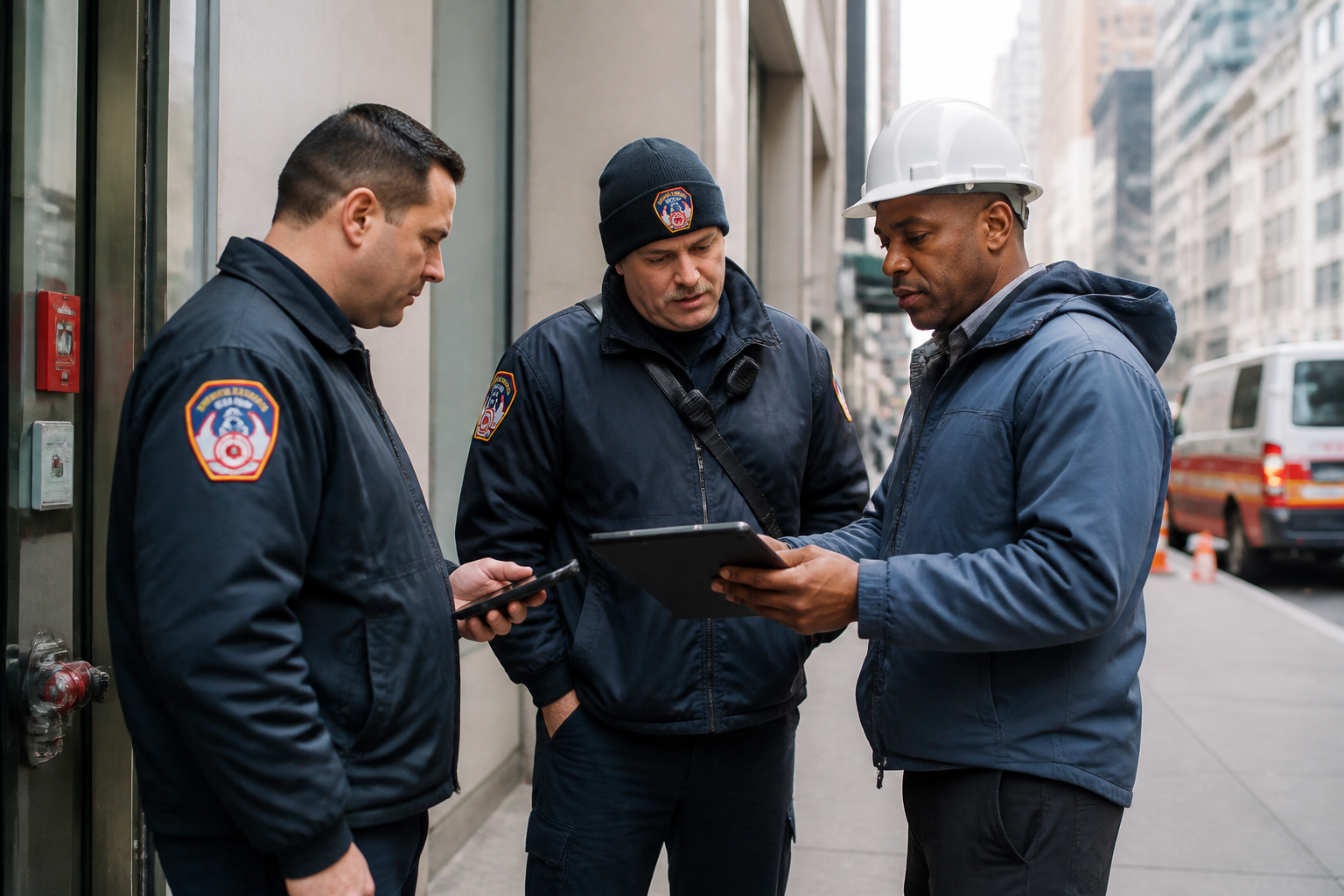
What You'll Need Before You Start Interviewing
-
Current building plans — floor layouts, roof access points, and stairwell locations for your property.
-
Existing fire alarm and communication system documentation, including any prior BDA or radio coverage reports.
-
Copies of past FDNY correspondence, violations, or objections tied to your building's fire safety systems.
-
Your building's occupancy classification under NYC fire code (this determines whether ARCS is even mandatory for you).
-
A list of at least 3-5 candidate vendors claiming FDNY ARCS approval.
-
Access to FDNY's public rules and regulations resources to independently verify agreement and filing claims.
-
A point of contact with roof access authority in your building, since testing will require getting techs onto the roof.
-
Basic familiarity with your borough's construction type — steel-frame Midtown towers test differently than a low-rise in Staten Island.
-
Time commitment: plan for 2-3 weeks to properly vet, interview, and reference-check a shortlist before signing anything.
-
No specialized technical skill required — just the discipline to ask direct questions and demand documentation instead of taking a pitch at face value.
Twenty years inspecting high-rises for FDNY taught one hard lesson: a bad radio system doesn't fail quietly. It fails during the fire, when a chief on the roof can't reach a company officer three floors down. That's exactly why New York City requires an Auxiliary Radio Communication System in buildings where steel and concrete swallow radio signals — and why picking the right installer matters more than most building owners realize.
Not every vendor knocking on your office door in Manhattan or Brooklyn is actually FDNY-approved ARCS material. Some hold a fire alarm license and figure ARCS is close enough. It isn't. Getting this wrong means failed inspections, stalled certificates of occupancy, and a board asking why the project ran six months over. Here's how to interview vendors like you've done it before — because the questions you ask now determine whether your next FDNY test cycle is routine or a headache.
What You'll Walk Away With (And What to Gather Before You Start)
Picture a compliance officer at a 40-story building on Water Street, three weeks from a scheduled FDNY inspection, realizing the building's radio coverage vendor never filed the right paperwork. That's the moment most people start calling around. Before you dial a single number, get organized — the goal here is a short list of qualified fdny approved arcs companies and a question set that separates real contractors from vendors who'll leave you exposed at inspection.
Pull together your building plans, current fire alarm system documentation, and any prior FDNY correspondence tied to your address. Confirm your occupancy classification under NYC fire code — it changes what's required. If your building previously relied on a bidirectional amplifier setup, dig up those records too, since a proper bidirectional amplifier installation history often reveals gaps a new ARCS vendor needs to address.
Step 1: Confirm the Company Actually Holds FDNY Approval
Anyone can print a business card that says fire safety. Not everyone can back it up. If a rep can't produce paperwork on the spot, that's your first red flag.
Ask for Their FDNY ARCS Agreement and Filing History
Don't accept a vague claim of being fdny arcs approved — ask for the actual FDNY ARCS agreement number tied to their company, plus a list of buildings they've filed for in the five boroughs. A contractor who's genuinely installed arcs systems in New York should hand over addresses, filing dates, — permit numbers without hesitation. If they stumble here, move on.
Cross-Check Against FDNY Records
Never take a sales pitch at face value. Pull FDNY's public rules — regulations resources and match the company name against active filings before signing anything. This one step catches most fakers — and takes maybe ten minutes.
Step 2: Ask About Their Testing and Commissioning Process
Would you trust a fire alarm vendor who's never set foot on your roof? That's the real test when vetting FDNY-approved ARC companies. Real testing means walking every floor with a handheld radio, checking signal strength at stairwells and mechanical rooms, and coordinating a roof visit with someone who understands FDNY roof operations firsthand — not just filling out a form after a quick walkthrough.
A steel-heavy high-rise in Midtown Manhunt or a Brooklyn tower with concrete cores behaves nothing like a two-story building in Staten Island. Dense steel construction eats radio signal, so testing needs to reflect that. Ask whether the company treats every arc system fire alarm the same way, or adjusts its approach for buildings like these. Firms that install arc system fire alarm setups in dense boroughs should test differently than those handling arcs systems in Staten Island low-rises.
Questions That Separate Real Testers From Paperwork Shops
-
How many floors do you actually test per site visit?
-
Do you simulate a fire department roof position during testing?
-
What hardware do you use for coverage mapping?
Step 3: Dig Into Their Hardware, Manufacturing, and Support Model
Here's a number that should stop you cold: roughly 40% of ARCS service delays in older buildings trace back to imported hardware sitting on a boat somewhere. Ask straight up where the equipment's built, whether it's proprietary or plug-n-play, and who's commissioning repairs if a panel fails at 2 a.m. on a Tuesday. Good vendors deliver public safety in-building communications systems with domestic manufacturing behind them — no six-week wait for a replacement board shipped overseas.
Get real numbers on 24/7 support response times. Can a technician actually reach a Midtown high-rise same-day given NYC traffic and building access restrictions? Companies handling auxiliary radio communication systems in NYC and the Tri-State Area should have local techs, not a call center routing you to someone three states away.
Red Flags in Hardware Sourcing
Watch for vague supply chain answers, long lead times on imported parts, or systems locked to the manufacturer's own techs for every service call. That's not a partner — that's a bottleneck.
Step 4: Review Their Track Record With NYC High-Rise Projects
Here's a myth worth killing: years in business doesn't equal ARCS experience. A contractor can run two decades of low-voltage work in New York and still fumble their first FDNY submission. What matters is a documented history with buildings like yours — a 40-story Financial District tower isn't a 12-story Bronx co-op, and the roof access negotiations aren't the same either.
Ask any fdny approved arcs companies candidate for three references from comparable jobs — matched by height, occupancy, and borough. A firm that's coordinated roof operations in Midtown knows building management logistics that a suburban installer never had to touch. Any real emergency responder radio system company should hand over that list without hesitation.
Questions to Ask References
Ask directly: how long from proposal to FDNY sign-off?
Were there issues during final inspection? Did the system pass on the first test cycle? Firms offering ARCS planning support for building owners and architects usually have clean answers to all three.
Common Mistakes to Avoid When Vetting ARCS Vendors
Picture this: a co-op board on the Upper West Side hires a fire alarm contractor for their ARCS project, only to find out three months later that FDNY rejected the filing because the vendor never actually held an approved agreement. That's a real scenario — it happens more than boards admit.
Here's what most people miss — a company that's great at in-building radio system installation isn't automatically qualified for ARCS work. The code requirements differ, the testing protocols differ, and FDNY doesn't treat them as interchangeable.
Don't ignore aesthetics either. Board members hate visible antenna hardware in lobbies. And don't sign anything until you know exactly who's filing the paperwork — that's where projects stall for months. Since ARCS systems for New York high-rises are now mandatory, get this right the first time.
Next Steps: Confirming You've Chosen the Right ARCS Company
Get it in writing. That's the whole game at this point. Once you've narrowed your list of FDNY-approved ARCS companies, request a written scope naming the FDNY agreement number, the exact testing methodology used in your building, and the support terms — including response times for hardware issues in the panel room or on the roof.
Verify the proposal matches what was actually discussed on-site. Nothing vague, nothing pushed off to a follow-up call. If a vendor won't put commissioning dates or coverage guarantees on paper, walk away — that hesitation tells you everything about how they'll handle a real FDNY inspection.
A New York building manager should confirm the vendor offers a full emergency responder radio system service, not just equipment drop-off. And ask directly whether their FDNY ARCS system services include ongoing testing, documentation, and 24/7 support after installation. Done right, your next inspection becomes routine paperwork, not a scramble.
What is FDNY ARCS, exactly?
ARCS stands for Auxiliary Radio Communication System — a dedicated radio setup that lets firefighters talk to each other inside a building during an emergency. New York's steel-and-concrete high-rises block normal radio signals, so FDNY requires ARCS instead of a standard bi-directional amplifier in most cases. It's a code mandate, not an upgrade option.
How long does it take to interview and hire an ARCS company?
Budget 3-4 weeks if you're doing this right. That covers requesting FDNY agreement proof, checking references from comparable buildings, and getting a written scope back. Rushing this step is how buildings end up with a vendor who stalls on filing paperwork for months.
What if a company won't share their FDNY agreement number?
Walk away. A legitimate ARCS contractor working in New York has nothing to hide about their standing with the department — if they dodge the question or get vague, that's a signal they're either unlicensed for this work or overselling their experience.
Is there a difference between fire alarm contractors and ARCS specialists?
Yes, and it trips up a lot of compliance officers. A fire alarm license covers detection and notification systems; ARCS is a separate radio communication discipline with its own testing protocol and FDNY sign-off process. Ask directly whether ARCS work is a core service or something they subcontract out.
What happens if the system fails its first FDNY test?
It gets sent back for adjustments — usually antenna placement, amplifier tuning, or coverage gaps on specific floors. Ask any vendor you're interviewing how often their installs pass on the first cycle. A contractor with a strong track record should pass most jobs the first time, not treat retesting as routine.
Do rooftop antennas cause problems with building aesthetics or roof access rules?
Sometimes, yes. FDNY roof operations and roof access requirements can limit where hardware gets placed, and building boards often push back on visible equipment near mechanical areas or setbacks. Bring this up early with any company you're vetting — the good ones plan around it instead of surprising you during installation.
Vetting FDNY-approved ARCS companies isn't about finding the friendliest sales rep or the fastest quote. It's about paperwork, roof access know-how, and hardware that won't leave a building blind when a technician can't get across town during rush hour. A contractor who hesitates on filing numbers, dodges questions about testing methodology, or can't name a comparable high-rise project in the Bronx or Queens has already told a compliance officer everything they need to know.
The buildings that sail through FDNY inspection aren't lucky — they're the ones whose owners asked hard questions before a contract got signed. Confirm the agreement. Check the references. Push for specifics on support response times, especially for towers where roof access requires coordinating with building management and FDNY operations at once.
So what's next? Pull together the shortlist this guide helped build, send each finalist a written scope request, and give them 48 hours to respond in writing. No response, no vague language, no deal.
How to align Arc Systems specs with fire code updates in New York, NY
What You'll Need Before you touch a spec sheet, get these items on hand. Skipping any of these usually means a second trip to the roof — or a second call to your FDNY inspector. Got all that? Good. Now let's walk through confirming where your building actually stands. FDNY updates the ARCS requirements more […]
Why Engineers Say Arcs Systems Matter More in New York, NY
Key Takeaways One failed radio test can stall signoff for weeks. In New York, that isn’t a paperwork headache; it’s an occupancy problem, a turnover problem, and sometimes a patient-safety problem. That’s why arcs systems keep coming up earlier in design meetings for high-rises, hospitals, and large commercial buildings—especially where thick concrete, steel framing, deep […]
How to Scope an Arcs System for Mixed-Use Towers in New York, NY
Key Takeaways That’s not a minor paperwork snag. In New York, a bad early model can trigger redesigns across risers, telecom rooms, pathway protection, acceptance testing, with change orders showing up just as permit drawings are supposed to settle down. For municipal reviewers and consulting engineers, the pressure point isn’t just code language. It’s the […]
Marconi Technologies
55 Broadway 3rd floor, New York, NY 10006
(212) 376-4548
marconitech.com
View Google Business Profile
Follow us: Facebook · Instagram · X (Twitter) · LinkedIn · YouTube


