
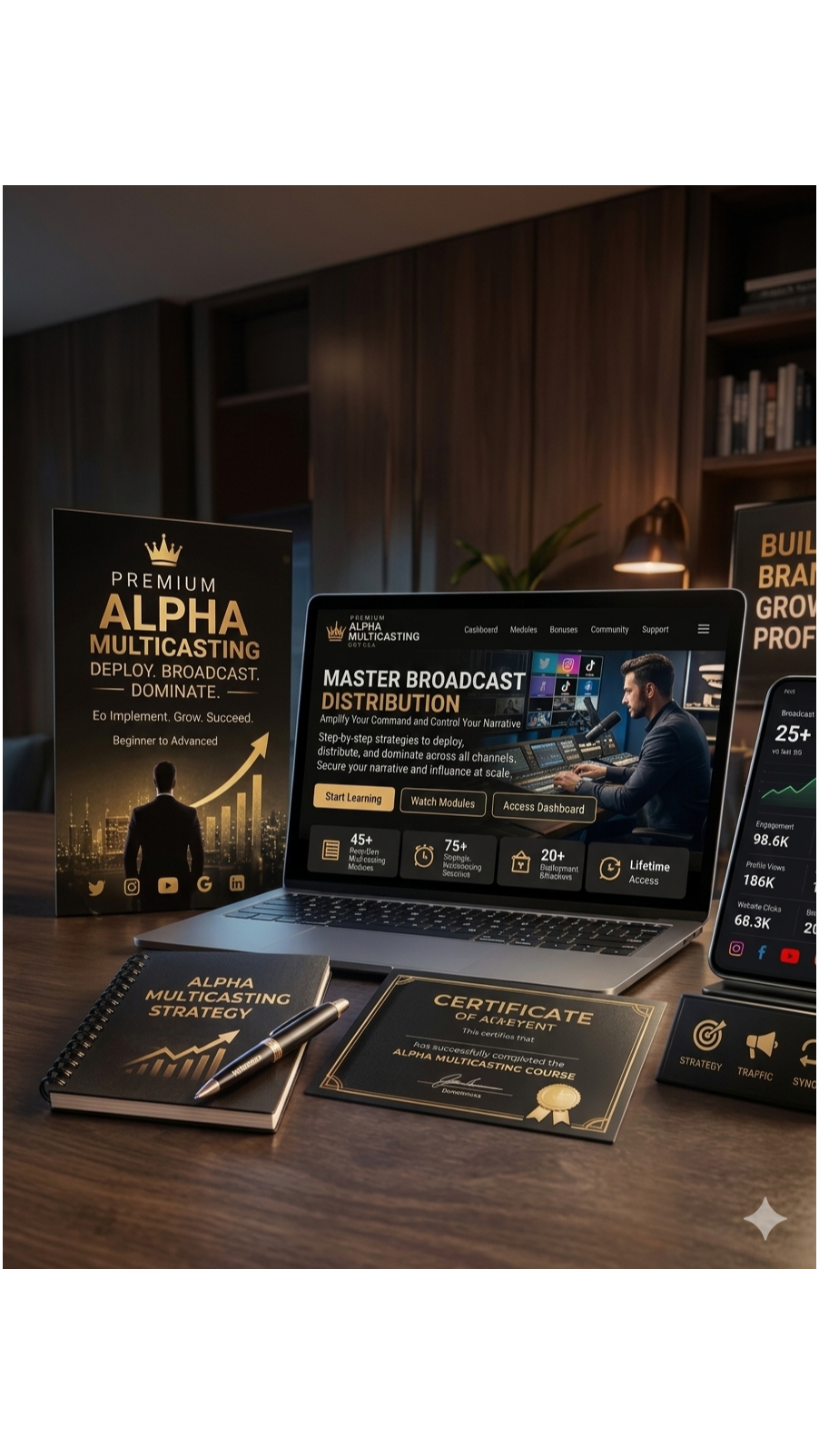
- Multicasting marketing distributes a single piece of content across multiple platforms simultaneously, creating hundreds of entry points for potential customers to find a business online.
- A multi-platform content distribution approach can boost content reach by up to 300%, compounding visibility over time rather than relying on a single channel.
- Organic traffic driven by multicasting can deliver up to 10X ROI—and unlike paid ads, it keeps working long after the content is published.
- Consistent messaging across channels signals trust to both Google and buyers, shortening the sales cycle and building durable brand authority.
- One documented case study shows a brand achieving 20,000% traffic growth in just 12 months using a structured multicasting approach—keep reading to see how the results break down.
Most entrepreneurs are still playing checkers while the top-performing brands are playing chess. The difference isn’t budget—it’s strategy. Multicasting marketing takes one strong idea and broadcasts it across every major platform where buyers are already searching, watching, listening, and scrolling. The result is a compounding visibility engine that paid ads simply can’t replicate.
Multichannel Marketing Is Now the Standard—Here’s Why
The numbers are clear. Research shows that 95% of marketers recognize multichannel marketing as a priority strategy for their organizations, and 86% report it is becoming more effective year over year. With more than 5 billion people online and consumers relying on multiple platforms before making a single purchasing decision, a one-channel approach leaves serious money on the table.
The shift makes sense when you look at buyer behavior. Someone might first encounter a brand through a YouTube video, read a supporting blog post a few days later, then spot an infographic on Pinterest before finally converting. Each touchpoint reinforces the last. When a brand is absent from any one of those moments, a competitor fills that gap instead.
Marketing budgets are following this reality. Brands that distribute content across three or more channels consistently outperform those locked into one or two—marketers using three or more channels in a single campaign have earned a 287% higher purchase rate than those using a single-channel campaign. It’s not about spreading thin—it’s about being present everywhere buyers already are, and making each piece of content work harder through strategic repurposing and distribution. Alpha Male Leadership has built an entire division around this principle, offering practical systems for entrepreneurs who want to scale visibility without scaling ad spend.
What Traffic Stacking Actually Means
One Piece of Content, Hundreds of Entry Points
Traffic stacking is the cumulative effect of distributing the same core message across multiple platforms and formats. Instead of writing one blog post and calling it done, a single piece of content gets repurposed into a video, an infographic, a podcast episode, a slideshow, and a news feature—then published across hundreds of high-authority sites simultaneously.
Each version of that content creates a new entry point. A buyer searching Google might land on the blog post. Another browsing YouTube finds the video. A third hears the audio ad on Spotify during a morning commute. All three of these people are now inside the same brand’s orbit—discovered through completely different channels, but receiving the same message.
This is the mechanical advantage of multicasting. One idea, multiplied across formats, distributed at scale, generates a web of visibility that a single channel can never match on its own. The content doesn’t just reach more people—it reaches the right people, wherever they happen to be paying attention.
Why Cumulative Visibility Beats Single-Channel Reach
Single-channel marketing is inherently fragile. An algorithm update, a policy change, a sudden drop in platform popularity—and overnight, visibility collapses. Businesses that rely entirely on one source of traffic are always one decision away from losing it.
Cumulative visibility works differently. Every platform a brand publishes to becomes a separate, independent traffic source. When one channel dips, the others continue delivering. Each new piece of content also adds to an existing body of work, building momentum over time rather than resetting with every campaign.
Research consistently shows that multi-platform content distribution can boost reach by up to 300% compared to single-channel approaches. High-performing brands don’t treat content as individual posts—they build a content ecosystem, surrounding their audience with helpful, relevant information across the entire buyer journey. That ecosystem compounds. The more content exists across more platforms, the harder it becomes for competitors to displace that brand in search results and buyer awareness.
The Six Content Formats That Stack Traffic
1. Blog Posts & Articles
Blog posts and articles are the foundation of any multicasting strategy. They carry the most keyword density, provide the most space for detailed explanation, and tend to earn backlinks from other sites—all of which signal authority to search engines. A well-written article targeting a specific search query can rank and generate traffic for years with minimal maintenance.
Articles also serve as the source material from which every other content format gets created. When the writing is strong at this stage, every downstream format benefits. A great blog post is the blueprint—everything else is built from it.
2. Videos
Video is the dominant content format online, and YouTube is the second-largest search engine in the world. Distributing video content across platforms like YouTube, Vimeo, and Daily Motion creates highly visible entry points for audiences who prefer watching over reading.
Video also builds trust faster than text alone. Seeing a face or hearing a voice attached to a brand accelerates credibility in a way that written content can’t fully replicate. For entrepreneurs in competitive markets, video presence is no longer optional—it’s a baseline expectation.
3. Infographics
Infographics compress complex information into a visually digestible format that gets shared widely across platforms like Pinterest and ImageShack. They’re particularly effective for statistics, step-by-step processes, and comparisons—content types that readers want to save and reference later.
From an SEO perspective, infographics generate backlinks organically. When other sites embed or share an infographic, they typically link back to the original source, creating additional authority signals for that brand’s website.
4. Podcasts & Audio Ads
Audio content reaches audiences that no other format can reliably capture—commuters, gym-goers, people doing household tasks. Distributing content to Apple Podcasts, Spotify, PodBean, and Google Podcasts puts a brand into the ears of buyers during moments when screens aren’t practical.
Audio ads also carry a personal, conversational quality that written content lacks. A well-produced podcast episode or audio ad builds familiarity quickly, making it one of the most efficient trust-building tools in the multicasting toolkit.
5. Slideshows
Slideshow content distributed through platforms like SlideShare and Pinterest serves a niche but valuable audience—professionals and researchers who want structured, scannable information. Slideshows perform particularly well in B2B contexts and for educational content, and they rank independently in search results, adding yet another entry point to the traffic stack.
6. News Features on High-Authority Sites
Getting a brand’s content published on high-authority news sites—Google News-approved outlets, Digital Journal, AZ Central (USA Today), Fox News affiliate sites, and 100+ premium news networks—is one of the most powerful visibility moves available. These placements carry significant domain authority, which transfers credibility to the featured brand through association.
News features also tend to appear prominently in search results because of the high trust signals those domains carry. A single news placement on the right site can generate more visibility than dozens of posts on a newer, lower-authority platform. When this is done consistently as part of a multicasting campaign, the cumulative authority effect is substantial.
How Multicasting Builds Brand Authority
Consistent Messaging Signals Trust to Google and Buyers
Brand authority isn’t declared—it’s earned through repetition, consistency, and presence. When a brand’s name, message, and expertise appear across dozens or hundreds of sites in a consistent voice, both search engines and human buyers start treating that brand as a trusted source.
Google’s ranking algorithms weigh trust signals heavily. When the same business name, address, and phone number appear on hundreds of major sites, it creates what’s known as citation consistency—a key local and national SEO factor. When content about a specific topic consistently links back to one domain, that domain accumulates topical authority over time.
For buyers, the effect is psychological. Encountering a brand multiple times across multiple respected platforms creates a sense of familiarity that advertising alone can’t manufacture. That familiarity translates directly into trust—and trust is what drives purchasing decisions.
Cross-Platform Familiarity Shortens the Sales Cycle
The average buyer needs multiple touchpoints before making a purchase. Research consistently shows that 87% of people conduct online research before committing to a buying decision. A multicasting strategy ensures that a brand shows up during as many of those research moments as possible—across search engines, video platforms, podcasts, and news sites.
Each exposure shortens the distance between first awareness and final purchase. A buyer who has seen a brand’s video, read its blog post, and stumbled across its news feature arrives at the sales page already warm. Objections are reduced. Trust is pre-established. The conversion becomes far easier—and conversion rates across all traffic sources improve as a result, not just from the content that drove the final click.
Organic Traffic vs. Paid Ads: The Long-Game Math
Up to 10X ROI That Compounds Over Years
Content marketing can deliver an ROI of up to 10X or more depending on the industry. The critical difference between organic and paid is the timeline and the compounding effect. Paid ads deliver traffic for as long as the budget runs. The moment spending stops, so does the traffic.
Organic content works the opposite way. A blog post published today can still generate traffic two years from now. A video that ranks on YouTube keeps earning views indefinitely. A news feature on a high-authority domain continues building credibility long after it’s published. The ROI from organic content doesn’t just hold steady—it grows over time as more content accumulates and more authority builds.
For entrepreneurs and business owners evaluating where to allocate marketing resources, the math heavily favors organic strategies when the goal is sustainable, long-term growth rather than short-term spikes.
No Per-Click Costs, No Algorithm Kill Switch
Paid advertising comes with two structural weaknesses that multicasting eliminates. First, there’s the per-click cost—every visitor has a price tag, and that price tends to increase as more competitors bid for the same audience. In highly competitive industries, pay-per-click costs can easily exceed the value of the traffic being purchased.
Second, there’s platform dependency. Businesses that run ads on a single platform are entirely subject to that platform’s algorithm, policy changes, and cost structures. A single update can double ad costs or eliminate audience targeting overnight.
Multicasting addresses both problems. Content distributed across hundreds of platforms isn’t dependent on any single algorithm. When Google updates its search ranking criteria, traffic from YouTube, Spotify, news sites, and SlideShare continues uninterrupted. Diversification across platforms is the most effective hedge against algorithm volatility—and it costs nothing per click once the content is live.
Real Results: 20,000% Traffic Growth in 12 Months
Theory is useful. Documented results are more convincing. In one case study from a medical device brand, a structured multicasting content strategy produced approximately 20,000% growth in organic traffic within 12 months. The financial impact was dramatic: monthly revenue grew from approximately $48,000 to $735,000—an increase of roughly $8.3 million in annual sales. (Source: AmpiFire customer success data.)
This wasn’t the result of a viral moment or a lucky algorithm boost. It was the product of consistent, systematic content distribution across multiple formats and platforms—exactly what traffic stacking is built to deliver. Each campaign added to the last, building a compounding visibility engine that kept pulling in new buyers month after month.
Separately, a retail apparel case study documented a 180% increase in organic traffic alongside a 1,000% growth in social media following—from 2,000 to 20,000 followers—after implementing a multichannel engagement strategy that combined social media, onsite content, and outreach. These results demonstrate that multicasting isn’t an industry-specific tactic. It works across verticals because it works with human behavior: people find what they’re looking for through many different paths, and multicasting ensures a brand is present at every one of them.
Build Your Multicasting Engine With Alpha Multicasting Marketing™
Building a multicasting engine from scratch requires systems, media connections, and consistent execution—three things most business owners don’t have the bandwidth to manage alone. That’s where a structured approach makes the difference between sporadic content creation and a real, compounding traffic strategy.
Alpha Multicasting Marketing™, one of the three core divisions at Alpha Male Leadership, is built specifically for entrepreneurs who want to expand reach, build authority, and generate organic traffic across multiple platforms without reinventing the wheel every month. The approach centers on distributing content in all six key formats—blog posts, articles, videos, infographics, audio ads, and slideshows—across hundreds of high-authority sites simultaneously.
The practical framework follows a straightforward but powerful sequence:
- Create – Develop original content built around what target buyers are actively searching for.
- Repurpose – Transform that content into every major format so no audience segment is missed.
- Distribute – Publish across Google News-approved sites, major podcast platforms, video networks, and premium news outlets at scale.
The compounding effect kicks in when this process repeats consistently. Each campaign adds new content to an existing base, strengthening authority signals, widening the keyword footprint, and creating more entry points for buyers at every stage of their research. Businesses that commit to recurring campaigns—weekly or monthly—build a visibility advantage that single-channel competitors simply cannot match over time.
For entrepreneurs serious about long-term, sustainable growth, the multicasting approach isn’t a marketing experiment—it’s the foundation of a durable online business. The question isn’t whether traffic stacking works. The evidence is clear. The question is how quickly a business starts stacking.
Find proven systems for business growth, digital marketing, and peak performance at Alpha Male Leadership, where entrepreneurs find the tools and strategies to dominate their markets.
Lopes Alpha Enterprises LLC
joaolopespaypal@gmail.com
+1 757 985 1713
30 North Gould Street
Suite AO15321
Sheridan
WY
82801
United States


