
Beijing, Sept. 21, 2026 – Five thousand years ago, the legendary ancestor of the Chinese nation left behind the prototype of the sport “Chiyou Play”. Five thousand years later, this traditional game with single-leg combat as its core has undergone 21 years of standardization and has grown into an original Chinese national sport with intellectual property rights in 118 countries and regions around the world. On September 17, the press conference “Foot Fighting · Towards the World – 2026 Foot Fighting Sports Global Launch” was held in Beijing. The layout of three national-level competitions, namely the City Foot Fighting King Ranking Tournament, the Foot Fighting Goddess Challenge, and the Foot Fighting Kids Club League, was unveiled at the same time, building a year-round competition matrix with “activities every week and highlights every month”.
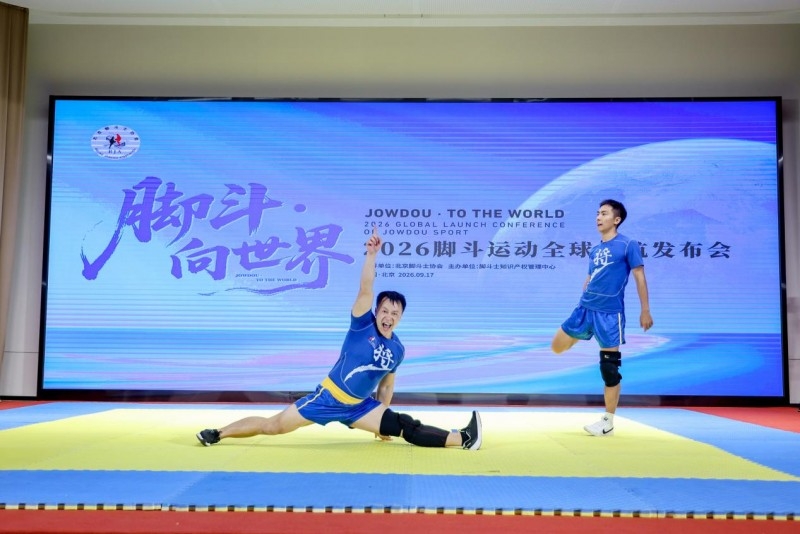
Games as Culture: A Contemporary Translation of Five Thousand Years of Civilization Genes
Foot fighting, a form of “crash fighting” or “cockfighting” deeply ingrained in the memories of countless Chinese people, requires no equipment and can be held anywhere—playground, threshing ground, or alleyway. Tracing its origins, its cultural lineage is directly connected to the “Chiyou Opera” of five thousand years ago, sharing the same lineage as Chinese martial arts.
In 2005, to promote traditional Chinese culture, the research and development team brought together 16 sports colleges across the country to select, explore, innovate, and formulate standards from more than 100 folk sports games, ultimately developing the original ethnic sport “Foot Fighter”. From the folk games passed down orally to the modern competition with strict rules, the evolution of Foot Fighter is itself a microcosm of the modernization of traditional Chinese ethnic sports.
“Revitalizing and inheriting traditions does not mean simply replicating folk customs as they are,” said Wu Yanda, founder of the foot fighting sport and president of the Beijing Foot Fighters Association. He explained that many traditional ethnic sports possess vibrant cultural cores but lack standardized competition systems, making it difficult to form a sustainable industrial ecosystem detached from folk contexts. “To truly adapt ancient folk sports to the needs of modern society for dissemination and competition, we must deeply explore traditional sports, complete standardized transformations, and establish a complete rule system.”
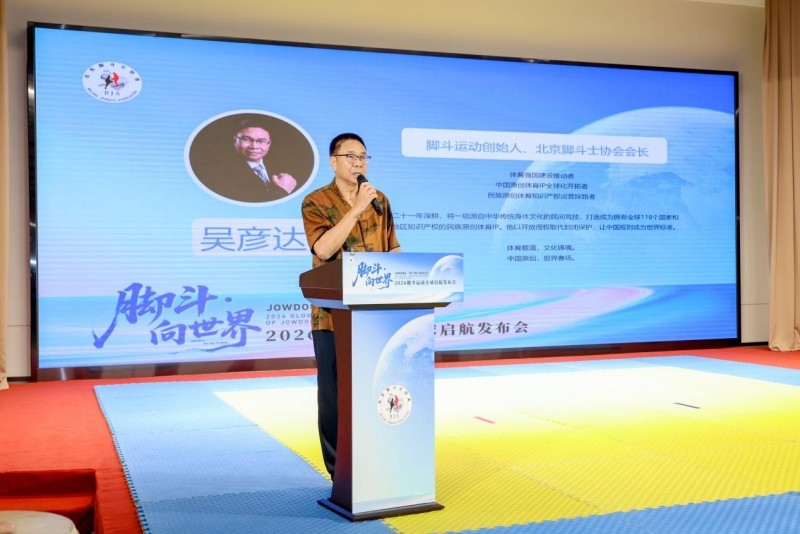
Rules are power: Prioritizing intellectual property rights establishes the right to set standards.
According to Wu Yanda, for Chinese ethnic and folk sports to truly go global, they must first adapt to the universal rules of world sports and possess considerable entertainment value and competitiveness—this is the foundation for generating commercial value. However, many ethnic and folk sports scattered across various regions, despite possessing a deep-rooted mass base and cultural heritage, have long faced the practical dilemma of inadequate intellectual property protection and a lack of standardized systems.
The answer provided by Foot Fighting is “prioritizing intellectual property rights.” Leveraging his ten years of legal experience, Wu Yanda spearheaded the establishment of an intellectual property brand management center early in the project’s development, completing a full-chain layout encompassing trademarks, competition rules, venue standards, and event IP. The establishment of the Foot Fighting Intellectual Property Management Center further breaks the limitations of the traditional sports IP “mature first, then license” approach, building a standardized licensing and operation system from the early stages of global promotion. This transforms core rights such as trademarks, patents, event hosting rights, and broadcasting rights into a standardized framework that is cooperative, replicable, and globally uniformly enforceable.
According to reports, the sport of foot fighting has completed a comprehensive intellectual property layout in 118 countries and regions worldwide, covering core IP assets such as event brands, technical rules, foot fighting arena standards, foot fighting dolls, foot fighting kings, and foot fighting goddesses. In the future, foot fighting will be conducted in more than 230 countries and regions around the world, all of which will need to obtain official intellectual property authorization. “The essence of global trade competition is not just about products, but also about rules, intellectual property rights, and brand discourse power.” This exploration based on intellectual property provides a more valuable industrial model for original Chinese sports IPs to participate in international competition and promote the “going global” of independent standards.
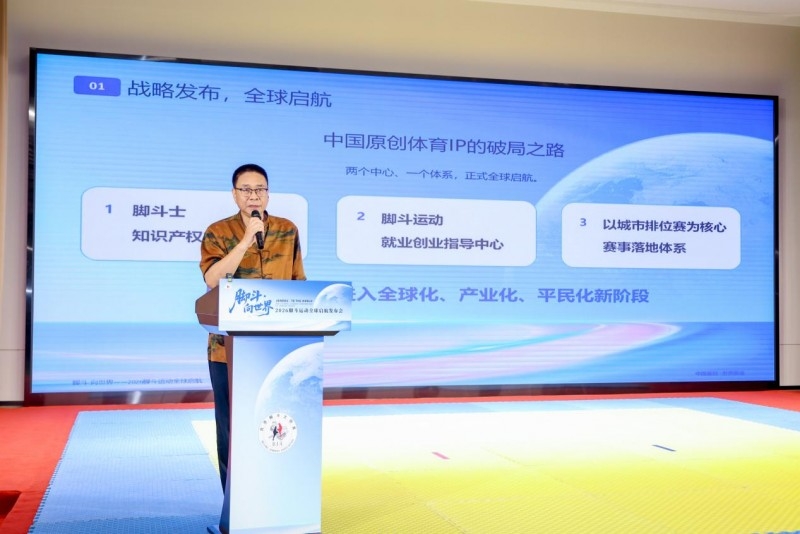
Sports as Education: The Dual Empowerment of Physical Education and Employment/Entrepreneurship
In education, the integration of physical education and academic learning in foot wrestling has laid a solid foundation. The Beijing Foot Wrestling Kids Competition, after six years of development, has established a standardized competition judging system, covering over 180 schools and tens of thousands of teenagers throughout the city. The competition closely adheres to the educational philosophy of “integrating physical education and academic learning in all aspects,” combining competitive sports with character development and intellectual growth. Lu Qin, chief education expert of the China Children’s Press & Publication Group, stated that foot wrestling has unique value in cultivating children’s focus, self-confidence, cooperation, and self-control, providing an innovative path for the “five aspects of education” and family education.
The establishment of the Employment and Entrepreneurship Guidance Center is an industrial extension following the implementation of the intellectual property system. The center breaks down the complete industry chain into a standardized job system that allows for training, certification, and employment, connecting the entire chain of “training—certification—employment—entrepreneurship—city partner,” covering diverse positions such as referees, coaches, operations, communication, and club management. It provides career advancement channels for retired athletes and sports graduates, as well as low-threshold skills development paths for the general public.
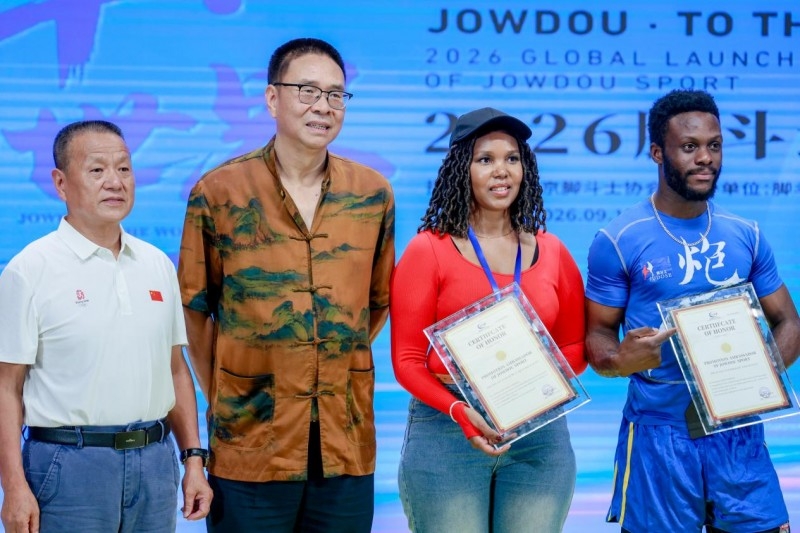
Culture is the future: Telling Chinese stories to the world through original sports.
“Popularization” is the key competitive advantage of foot fighting events. Unlike the high barriers to entry in traditional professional competitions, foot fighting requires no complex equipment and is not limited by venue. It can be quickly implemented in playgrounds, commercial atriums, and community open spaces, allowing people of all ages to participate without any barriers. In September 2024, the “Nighttime Beijing New National Trend” Foot Fighting Carnival was held at Wanda Plaza in Dongba, Chaoyang District, Beijing. More than 450 teenagers from 38 teams representing 17 schools competed in the commercial atrium, connecting surrounding businesses and boosting consumption, becoming a vivid example of the integration of “sports + commerce”. The accompanying “Foot Fighting Arena” public space network will create a miniature cultural and sports tourism complex integrating sports experience, event hosting, parent-child interaction, and cultural and sports consumption, realizing the comprehensive value of “one event activating a city”.
At the industrialization level, Jiaodou has launched a “City Partner” model, with intellectual property sharing at its core. This model authorizes brands, standards, and systems to partners in various provinces, cities, and even globally, allowing participating entities to share the IP benefits. Regarding overseas expansion, Wu Yanda revealed that Jiaodou is planning to build an international Jiaodou Academy, export its certified coach and referee system, and host international Jiaodou King and Goddess competitions. Leveraging platforms such as BRICS, the Shanghai Cooperation Organisation, and China-Africa cooperation, Jiaodou aims to promote globalization through intellectual property trade. “China’s 5,000-year-old culture is profound and extensive, but it lacks a vehicle for dissemination. Sports are the carrier of culture, and culture is the soul of sports. National originality and global standards are the ‘core chips’ for a strong sporting nation and a strong cultural nation.”
From the “Chiyou Play” of 5,000 years ago to a modern sports project with intellectual property rights covering 118 countries and regions around the world, the foot fighting sport has embarked on a path of modernization for national folk sports through “standardization, IP development, industrialization, and internationalization” with its own rules, independent intellectual property rights, and complete industrial system. It has also contributed a more accessible and inclusive Chinese solution to the diversity of global sports.
About Jowdou:
Jowdou Sport has rolled out full spectrum intellectual property rights coverage in 118 countries and regions around the globe.
Media Contact
Company Name: Judose Intellectual Property Management Center (Beijing) Co., Ltd.
Contact Person: Song Xuewen
Email: Send Email
Country: China
Website: https://scroll.huanqiu.com/article/4TGOFy1XdQS


