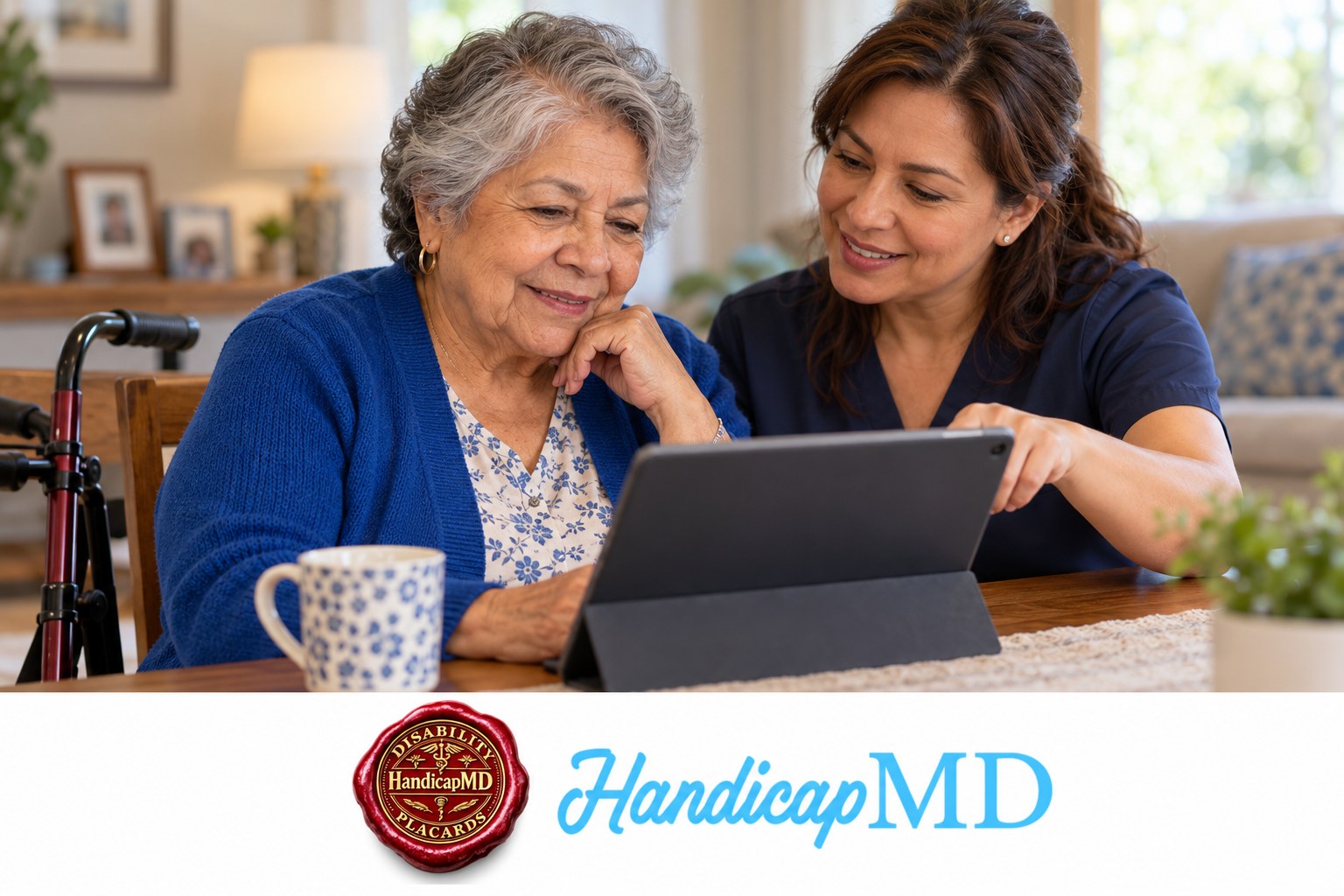
New educational resource connects condition-specific guides, medical evaluation questions, and state-by-state handicap parking eligibility information.
LOS ANGELES, CA, UNITED STATES, October 25, 2026 /EINPresswire.com/ — HandicapMD is announcing its Handicap Placard Eligibility & Qualifying Conditions Resource Center, an educational directory designed to help readers move from a broad diagnosis question to more focused application preparation. The resource brings condition-related guides into a browsable starting point and directs readers to the requirements where they apply. It is intended for patients, caregivers, and others trying to understand what information to discuss during a medical evaluation.
The announcement addresses a common search question: what medical conditions qualify for a handicap placard? The resource’s central distinction is that a condition name and an eligibility decision are different things. Readers should use educational information to organize questions about their circumstances rather than treat a directory entry as a certificate, a diagnosis, or a promise of a parking credential.
A clearer name for a useful national starting point
The Handicap Placard Eligibility & Qualifying Conditions Resource Center is available through HandicapMD’s existing guide directory. Its topics include pain and joint concerns, neurological and balance questions, heart and lung conditions, vision, recovery, and other condition-related subjects. The directory also points readers toward state requirements. A topic appearing in the resource does not establish that everyone with that diagnosis qualifies in every jurisdiction.
Readers can visit the qualifying conditions resource center to browse guides, explore HandicapMD for information about medical evaluations, and use the national handicap parking eligibility guide to begin reviewing jurisdiction-specific pathways. These three resources answer related questions, but none replaces the current instructions supplied by the government office responsible for issuing a placard or permit.
From an internet search to a better question
A search result can be a useful beginning without resolving an individual application. A person may know the name of a condition but be unsure which facts matter during a consultation. Another reader may already hold a credential and need an administrative answer. The resource encourages each reader to identify that starting point before assuming the same next step applies to everyone.
For a household helping with paperwork, begin by writing down the unanswered question in plain language. It might concern which form applies, what information a clinician needs, or whether the next contact should be an issuing office. Keeping that question visible helps a family evaluate whether a page actually answers it, instead of collecting unrelated documents simply because they appeared in search results.
The directory is also a way to organize further reading. A reader can start with a relevant topic, note unfamiliar terms, and bring those questions to an appropriate professional. Educational reading should support a conversation about the person’s own experience. It should not be used to rehearse answers that belong to someone else or to convert a general description into an unsupported claim.
Medical assessment and credential issuance remain separate
HandicapMD provides an independent medical evaluation service. When supported by the clinical assessment and applicable requirements, a clinician can provide medical documentation for the appropriate application. The government agency reviews the separate request and decides whether to issue the credential. The Resource Center is educational and does not itself perform either decision-making function.
A useful expectation is that a consultation can lead to questions, a request for additional information, or a clinical decision. Booking does not establish eligibility. Likewise, receiving clinical documentation does not establish that an issuing office has received a complete application. Readers should ask what remains to be done and keep the instructions for each organization separate.
Making the Resource Center useful for caregivers
A caregiver may be the person who finds a guide, organizes a folder, or coordinates transportation. Agree on those responsibilities before beginning several tasks at once. Ask how the applicant would like to participate and whether communication assistance would help. Keeping the applicant’s preferences visible can make the process more manageable without turning a helper’s convenience into the purpose of the medical assessment.
When several relatives are helping, use a clear naming convention for documents. Distinguish an unfinished form from completed certification and a submission copy from a government response. Keep the latest response beside the relevant application so that a follow-up call addresses the actual outstanding item. A shared understanding of the next step can prevent unnecessary duplicate work.
A state-specific question deserves a state-specific answer
The national eligibility guide can help readers identify the responsible program, but applicants should verify their own form and current instructions. Similar-looking credentials may involve different documents, authorized certifiers, categories, and administrative routes. A familiar form number from another household’s experience should not become the assumed starting point for an application in a different jurisdiction.
Readers should also distinguish an application question from a destination question. An issuing office can explain a credential transaction, while a venue can answer questions about entrances, seating, and assistance during a visit. Neither organization should be assumed to manage the other’s responsibilities. The Resource Center’s value is helping a reader organize the next inquiry more clearly.
What to bring to a medical conversation
A person can prepare a brief account of ordinary activities, relevant concerns, and changes over time. Select examples that communicate the actual issue rather than trying to produce a perfect narrative. If records are available, organize the relevant documents and ask what else may be useful. Explain recurring fluctuations without presenting an unusual experience as the entire pattern.
Write down unresolved questions at the end of a discussion. Ask how any completed documents will be provided and whom to contact about an error. If the clinician needs more information, clarify the request before repeating unrelated tasks. A focused follow-up can be more useful than starting a new search with the same uncertainty.
An educational launch with practical expectations
The Resource Center is intended to make reading and preparation easier. It does not announce a change in state law, a new government benefit, or guaranteed approval. Readers should evaluate a private service by what it provides, how it communicates its decision, and the steps that remain afterward. Clear expectations are part of useful health information.
Before purchasing a service, ask what the charge covers and how the service handles a request that cannot be completed as expected. Keep private clinical charges distinct from government fees and destination parking costs. Written service information is a better basis for that decision than assuming that a headline describes every part of the transaction.
Applicants can also make a short preparation note before speaking with a clinician or licensing office. Useful questions include what information is missing, who is responsible for completing it, and how the finished documents should be delivered. Keeping the answers together can make follow-up conversations more productive, especially when a caregiver is helping coordinate appointments and paperwork.
For an evaluation, an applicant can describe ordinary experiences in concrete terms: where a walk began, when a rest became necessary, what assistance was used, and whether symptoms changed during the trip. These examples are ways to communicate clearly, not instructions to perform a test. No one should attempt an unsafe walk, withhold prescribed treatment, or exaggerate limitations to prepare for a discussion.
A useful conversation leaves room for both difficult days and better days. If symptoms fluctuate, explain the pattern and any relevant treatment history. If records are available, organize the documents most relevant to the concern rather than burying the discussion in unrelated paperwork. The clinician can then explain what further information, if any, is needed to assess the medical request.
Using a guide without losing the original question
It can be tempting to follow every related link when a subject feels unfamiliar. Instead, keep a small list of questions and mark which ones a page answers. If a page explains a condition but does not answer a filing question, note the distinction. Return to the relevant agency instructions before deciding which documents to submit or which office to contact.
Readers can also use the resource to prepare a concise summary for a conversation. List the issue that prompted the search, the information already available, and the next decision that needs attention. This approach helps distinguish curiosity about a medical topic from a request for an individual evaluation. It can also keep a follow-up appointment focused when several concerns are being discussed together.
For families managing several appointments, agree on one place for current instructions. Avoid relying on a screenshot without its context or an old message whose requirements may concern another transaction. When an instruction is unclear, return to the responsible organization with the specific question. Educational resources work best when they make that conversation easier, rather than becoming a substitute for the answer.
Bring a focused question to each conversation. A clinician can explain what information is needed for a medical assessment, while an issuing office can explain an incomplete application or an administrative request. Writing down the question first can help a person avoid leaving with a general answer when a specific document or decision is still outstanding.
When a caregiver is helping, agree on who will keep records and who will follow up. The applicant should remain involved to the extent they wish and are able. Keep the latest instructions together, distinguish completed documents from working copies, and explain any communication assistance that would make an appointment easier to follow.
For a planned journey, consider the whole visit rather than only the parking space. Ask the destination about the entrance, seating, indoor distances, and arrangements for assistance. Those practical questions can be useful whether the applicant is awaiting a decision or already holds a credential. They should be directed to the organization responsible for the location.
Keep a short record of conversations, including the date, the organization contacted, and the next step. If instructions appear inconsistent, ask the responsible office to clarify the current requirement before submitting paperwork. A written note helps the household follow through without assuming that an earlier conversation covered a different application category.
Online information is easier to use when each page answers a particular question. Begin with the jurisdiction-specific guide for the application pathway, then use a broader eligibility resource to prepare discussion topics. Return to the issuing agency for its current form and transaction instructions. Educational reading supports preparation; it does not record a medical decision.
A person preparing for an evaluation can choose a few ordinary examples rather than trying to describe every journey ever taken. Explain the setting, the support used, and the concern that made the route difficult. Include relevant changes over time. The point is accurate communication, not constructing a story that resembles someone else’s application.
If a document comes back with a request for correction, first identify which section is affected. A missing applicant signature, an unanswered administrative question, and a clinical clarification may require different people to respond. Keep the returned notice with the application so the explanation is available during the follow-up conversation.
Keep copies of completed application documents. Confirm current instructions before submitting any paperwork. Bring questions to the organization responsible for answering them. Describe your own circumstances accurately during every medical conversation. Review the next step before arranging transportation to an office. Record the credential expiration and follow the issuing agency’s instructions. Use a secure method when sharing personal or medical information. Keep the applicant involved when a caregiver helps organize paperwork. Check that names, contact details, signatures, and dates are complete. Tell the service about communication assistance needed for the appointment.
About HandicapMD
HandicapMD provides online medical evaluations related to disability parking certification. When supported by the clinical assessment and applicable requirements, a licensed clinician completes the medical portion of the relevant application. The company’s educational resources explain state processes and help residents prepare questions. Government agencies retain responsibility for reviewing applications and issuing parking credentials.
https://www.handicapmd.com/
Crystal Dennon
HandicapMD
help@handicapmd.com
Visit us on social media:
Instagram
Facebook
YouTube
Qualifying Conditions for a Disabled Parking Permit
Legal Disclaimer:
EIN Presswire provides this news content “as is” without warranty of any kind. We do not accept any responsibility or liability
for the accuracy, content, images, videos, licenses, completeness, legality, or reliability of the information contained in this
article. If you have any complaints or copyright issues related to this article, kindly contact the author above.

Media gallery