
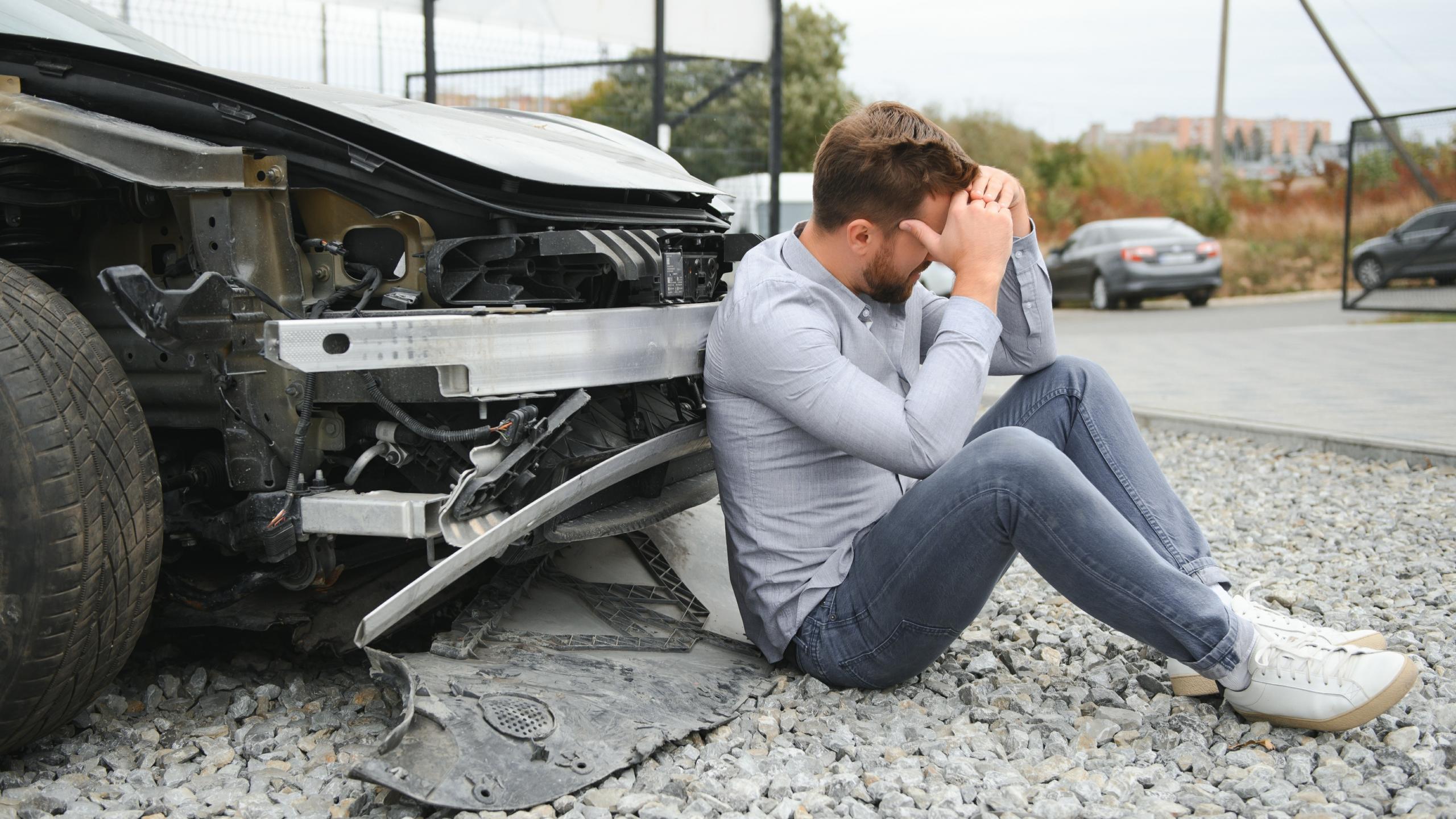
Right after a crash, most people have the same question: whose fault was this? The answer shapes almost everything that follows, from which insurance company pays to how much an injured person can recover. In Texas, the type of crash offers a strong first clue. It rarely settles the question on its own.
This guide walks through the most common types of car accidents on Texas roads, the traffic rules that usually decide fault in each one, and how Texas law splits responsibility when more than one driver made a mistake.
Key Takeaways
- Crash type is a clue, not a conclusion. Rear-end, left-turn and head-on crashes usually point to one driver; sideswipes, parking lot crashes and pileups are more often shared or disputed.
- Texas uses a 50 percent bar. If an injured person is found more than 50 percent responsible, they recover nothing, and anyone at 50 percent or less has the award reduced by that share.
- The police crash report often relies on statements made at the scene, so it is not always the final word on fault.
- Most Texas injury lawsuits must be filed within two years, and claims involving a government entity can require notice within six months.
Why Crash Type Is Only the Starting Point
Texas is an at-fault state. The driver whose negligence caused a crash, and that driver’s liability insurance, is normally responsible for the resulting injuries. Negligence means failing to use the care a reasonable driver would use, and breaking a traffic law is strong evidence of it.
That is why crash type matters. Each common collision aligns with a specific rule in the Texas Transportation Code, and the driver who broke that rule usually bears most of the blame. The León Law Firm’s full breakdown of car accident types in Texas and who is at fault covers 10 crash types in detail. The sections below focus on the three most common ones, then summarize the rest.
The stakes are real. According to the Texas Department of Transportation’s 2025 Texas Motor Vehicle Traffic Crash Facts report, one reportable crash occurred every 59 seconds in Texas in 2025, and 3,769 people died on Texas roads.
Rear-End Collisions
Rear-end crashes are the most familiar type of collision, and they usually have the clearest answer. Texas Transportation Code § 545.062 requires a driver to stay far enough behind the vehicle ahead to stop safely. When a following driver hits the car in front, that driver is typically found at fault.
“Typically” is the key word. The front driver can share some responsibility in situations such as:
- Stopping suddenly for no traffic reason
- Driving with broken brake lights
- Cutting into a lane and braking immediately
- Reversing into the vehicle behind
Even in those cases, the following driver often keeps a large share of the fault, because the safe-distance rule still applies.
T-Bone (Side-Impact) Collisions
A T-bone crash happens when the front of one vehicle strikes the side of another, usually at an intersection. TxDOT’s 2025 report counts 955 deaths in crashes at or related to intersections, a category that includes T-bone crashes along with other types.
Fault in a T-bone crash usually turns on the right-of-way. Two rules come up most often:
- Red lights. Under § 544.007(d), a driver facing a steady red signal must stop.
- Stop and yield signs. Under § 545.151(a), a driver at a stop or yield sign must yield to traffic with the right-of-way.
The hard part is often proving who had the green light. Witness statements, traffic camera footage and vehicle data become especially important, because each driver may remember the signal differently.
Sideswipe Collisions
Sideswipes happen when two vehicles traveling side by side make contact, often during a lane change or merge. Two rules apply: drivers must stay within a single lane as nearly as practical under § 545.060(a), and must signal before changing lanes under § 545.104(a).
The driver who moved into the other lane is usually responsible. Sideswipes are also one of the crash types where shared fault comes up most often. Both drivers may have drifted, or one may have been speeding in a blind spot. Damage location on each vehicle frequently helps reconstruct who moved first.
Other Common Crash Types at a Glance
The remaining crash types follow the same logic: identify the rule, then identify who broke it.
- Head-on collisions. The driver who left the proper lane is usually at fault under the keep-right rule in § 545.051(a). TxDOT counted 555 head-on crash deaths in 2025.
- Left-turn accidents. Turning drivers must yield to oncoming traffic under § 545.152. Fault can shift if the oncoming driver was speeding or ran a red light.
- Single-vehicle crashes. These are often the driver’s fault, but road defects, other drivers who forced the vehicle off the road, or vehicle defects can add responsible parties. TxDOT reported 1,201 deaths in single-vehicle, run-off-the-road crashes in 2025.
- Multi-vehicle pileups. Fault is usually divided among several drivers, and the first impact matters most.
- Rollovers. Responsibility generally lies with whoever caused the first event, although a manufacturer can share the blame if a defect contributed.
- Parking lot accidents. Most Transportation Code rules apply to highways, so parking lot cases usually turn on ordinary negligence and the specific facts.
- Hit-and-run crashes. Drivers involved in a crash must stop and exchange information under §§ 550.021 and 550.023. When the other driver cannot be found, the injured person’s own uninsured motorist coverage may be the main source of recovery.
How Texas Divides Fault: The 50 Percent Rule
Many crashes involve mistakes by more than one person. Texas handles that through proportionate responsibility under Chapter 33 of the Texas Civil Practice and Remedies Code.
A jury assigns each party a percentage of responsibility. Two rules then control recovery:
- An injured person found more than 50 percent responsible cannot recover damages (§ 33.001).
- An injured person found 50 percent or less responsible can recover, but the award is reduced by that percentage (§ 33.012).
For example, if a jury finds damages of $100,000 and assigns the injured driver 20 percent of the fault, recovery drops to $80,000. At 51 percent, the recovery is zero.
Because these percentages carry so much weight, insurance companies often argue for a higher share of fault against the injured person. Understanding how a car accident lawsuit works in Texas helps explain where those fault arguments are made and decided.
The Evidence That Settles Fault
Crash type and traffic rules frame the question. Evidence answers it. The most useful types of evidence include:
- Photos and video of the scene, vehicle damage, skid marks, signals and road conditions
- The Texas Peace Officer’s Crash Report (CR-3), which records the officer’s observations
- Vehicle event data, which can show speed, braking and steering in the seconds before impact
- Independent witnesses, whose accounts carry weight because they have no stake in the outcome
- Medical records, which connect injuries to the crash
The crash report deserves a caution. Officers usually arrive after the collision and often rely on what drivers say at the scene. A report can contain errors, and it does not decide fault on its own. Much of this evidence also disappears quickly. Surveillance footage is often overwritten within weeks, and vehicles get repaired.
Deadlines That Apply to Every Crash Type
No matter how clear the fault is, a claim can be lost if it is filed too late. Most Texas personal injury lawsuits must be filed within two years under Texas Civil Practice and Remedies Code § 16.003. Claims against a government entity, such as a crash with a city vehicle or one caused by a road defect, generally require written notice within six months, and some cities set shorter deadlines.
The firm’s guide to how long Texans have to file a personal injury claim explains these deadlines and their exceptions.
When Fault Is Disputed
Clear rear-end crashes with good evidence sometimes resolve without much argument. Disputed intersection crashes, sideswipes, pileups and hit-and-runs often do not. In those cases, early legal help can make the difference in preserving evidence, identifying every responsible party and pushing back on an inflated fault percentage.
The León Law Firm’s Texas car accident lawyers handle these cases statewide, in English and Spanish, on a contingency-fee basis.
The Bottom Line
The type of crash points toward who is likely at fault, and the Texas Transportation Code usually identifies the rule that was broken. Evidence confirms it, and the 50 percent rule decides how fault turns into money. Knowing all three pieces helps injured drivers understand where their claim stands.
Readers can learn more about The León Law Firm and its bilingual practice in Sugar Land.
Carlos A. León is the founding attorney of The León Law Firm, P.C., a bilingual personal injury firm in Sugar Land, Texas. He earned his law degree from the University of Houston Law Center in 1995 and represents injured clients throughout Texas.
The León Law Firm, P.C.
1 Sugar Creek Center Boulevard
Sugar Land
TX
77478
United States


