
Radian Aerospace (Radian) today announced Foundry 1, a planned advanced manufacturing facility designed to expand access to ceramic matrix composites (CMCs), the lightweight, heat-resistant materials critical to defense and space applications, including hypersonic vehicles, missile defense, propulsion and reusable spacecraft. Foundry 1 will combine automated production, high-temperature processing and digital inspection to address manufacturing bottlenecks in these industries. The company is targeting an approximately 50 percent reduction in CMC manufacturing costs by reducing manual labor, shortening processing cycles and minimizing material waste.
This press release features multimedia. View the full release here: https://www.businesswire.com/news/home/20261117986802/en/
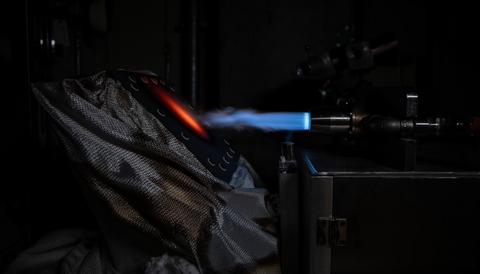
Radian developed the Foundry concept through its work on Radian One, its fully reusable spaceplane program, where thermal protection and access to affordable, repeatable CMC production are essential to enabling repeated flights. Foundry 1 builds on that work, creating a path to revenue through materials, components and engineering services for outside customers while developing the manufacturing capabilities needed for Radian One.
“We set out to build a reusable spaceplane, and that meant solving some of the hardest problems in high-temperature materials,” said Richard Humphrey, co-founder and CEO of Radian. “What we found was a manufacturing constraint that reaches well beyond our own vehicle. Defense and space programs need these materials at costs and production rates that today’s supply base cannot deliver. Foundry 1 unlocks a substantial commercial opportunity for Radian and a more direct path to revenue. It positions us to supply customers across these industries while advancing the technology that will make Radian One possible.”
CMCs combine reinforcing fibers, such as carbon or silicon carbide, with a ceramic matrix. The ceramic provides resistance to extreme heat, while the fibers help the material carry loads and resist damage from cracking. This combination enables strong, lightweight components for environments that challenge conventional metals, including rocket nozzles, hypersonic leading edges, reusable heat shields and turbine hot sections. Their ability to withstand higher operating temperatures can also help improve engine efficiency and reduce cooling requirements.
As demand for advanced defense systems continues to grow, so does the need for domestic manufacturing capacity to support their production. Foundry 1 is designed to help meet this need. Access to CMC production remains constrained by labor-intensive fabrication, lengthy furnace cycles and the difficulty of producing consistent, qualified parts at scale. Much of the established capacity serves manufacturers’ own programs, limiting options for outside customers seeking an independent supplier.
Foundry 1 is being designed to integrate the manufacturing process from fiber placement through inspected components. Robotic fiber placement will reduce manual fabrication work; precision furnaces will support shorter processing cycles; and parts formed close to their final shape will require less machining. AI will analyze manufacturing, inspection and performance data from each component, using those insights to continuously refine production processes, reduce defects and rework, and improve quality and throughput over time.
“The value of ceramic matrix composites is well established. The challenge is making them consistently, affordably and in the quantities that emerging programs require,” said Dr. Greg Scofield, an advisor to Radian and former director of the Purdue Hypersonics Laboratory, with prior experience at Rolls-Royce. “Radian is approaching that challenge as an integrated manufacturing problem. Designing fiber placement, thermal processing and inspection together creates an opportunity to improve cost and quality throughout the production line, with benefits for customers across defense and space.”
Radian brings direct experience developing and testing CMC hardware. Its patent-pending Dur-E-Therm reusable thermal protection system underwent ground testing at NASA Glenn Research Center under a Space Act Agreement, reaching approximately 2,700°F through simulated ascent, re-entry and hypersonic profiles, including two 120-minute hypersonic test runs. The tests provide a technical foundation for Radian’s work in extreme-temperature materials.
The company’s engineering and advisory team draws on expertise across spaceflight, propulsion, advanced materials and composites manufacturing with backgrounds including Boeing’s X-33, Northrop Grumman’s B-21 Raider, the International Space Station, and Rolls-Royce.
Radian has already secured letters of intent from prospective customers, demonstrating demand for the capabilities Foundry 1 is being designed to deliver. While the facility is being developed, Radian can support prototype articles, process development and customer-funded demonstrators through partner facilities, allowing customer work to begin ahead of Foundry 1’s operation. The company is actively evaluating potential locations for Foundry 1.
About Radian Aerospace
Radian Aerospace is an advanced materials manufacturer developing Foundry 1, an independent, automated production facility for ceramic matrix composites serving defense and space applications. The company’s capabilities include Dur-E-Therm, its patent-pending reusable thermal protection system, developed through work on Radian One, a spaceplane designed for fully reusable, horizontal takeoff and landing, single-stage-to-orbit operations. Foundry 1 expands access to extreme-temperature materials while advancing the technology needed to enable Radian One. Radian is headquartered in Seattle. For more information, visit radianaerospace.com.
View source version on businesswire.com: https://www.businesswire.com/news/home/20261117986802/en/
Media gallery



